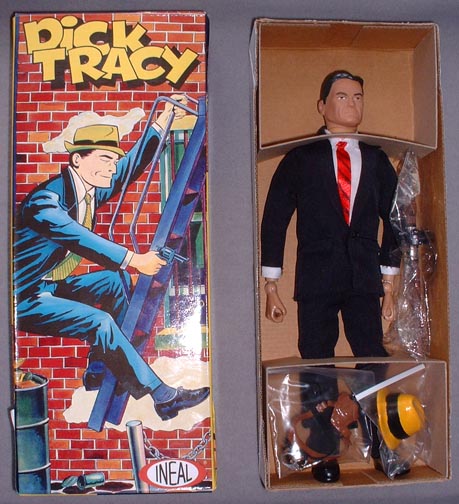
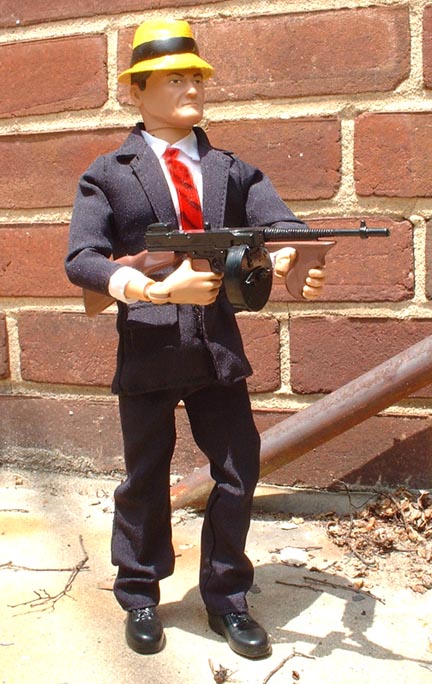
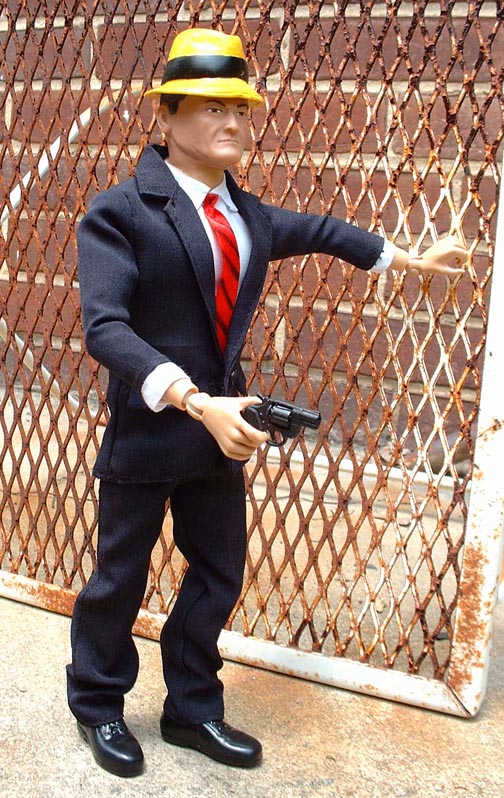
Monday, September 24, 2007

NEW MEXICO DREAMIN'

I recently returned from a trip to New Mexico. This is the second time I’ve been there (the first was on my honeymoon), but I’ve been dreaming about the Land of Enchantment for 17 years, thanks to that All-American Super-Spy Matt Helm.

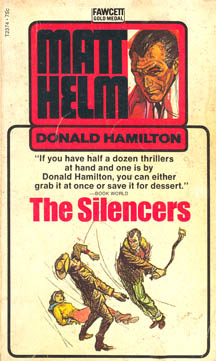
In 1990, I decided to pick up a second-hand paperback copy of The Silencers, primarily to see how different the literary Matt Helm was from the celluloid one. I knew the novels couldn’t be as absurd as the movies, but I wondered if any of the plot from the book was retained for the movie. As it turned out, quite a bit of the story was carried over to the movie, but it was twisted, pretzel-like, so that it resembled a James Bond spoof rather than a hard-boiled spy thriller. I was so impressed with the novel’s gritty realism, I suddenly felt sad that the movie series was such a lost opportunity. However, I was glad that I read the book and was particularly taken with the book’s setting: New Mexico.

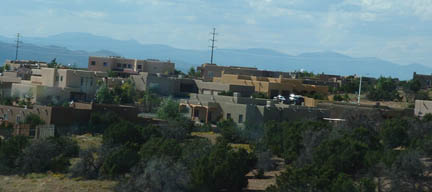
The author, Donald Hamilton, followed the writer’s adage of “write what you know” and based Matt Helm in Santa Fe, Hamilton’s hometown at the time. Although Helm would later become something of a globe-trotter, early novels like The Silencers remained rooted mostly in the Southwest. I was immediately captivated by Hamilton’s descriptions of the quaint town and the stunning high desert which surrounded it. Of course, these desolate stretches were perfect backdrops for high speed chases and tense shootouts. No witnesses and little chance of police interference. These open expanses of brush-dotted desert also forced Helm to be a bit of an outdoorsman, something Donald Hamilton was in real life. By the time I finished reading The Silencers, I was convinced that New Mexico was a place I wanted to move to one day. Thankfully, after meeting my wife, I was able to talk her into my dream as well, and this latest visit to the state was a chance to make a serious assessment of our future home.


As we drove around those deserts and mountains, I couldn’t help but think about those harrowing battles Matt Helm fought under the blazing sun, with little cover and no hope of reinforcements. When my wife and I got caught in a heavy thunderstorm on our way to Bandelier National Monument and were forced to pull off the road, I was reminded of the scene in The Silencers when Helm and his witness were forced to spend the night in his truck after getting caught in a snow storm. Coming from a congested state like Maryland, I’m always struck by the wide open nature of New Mexico. There’s a real sense that you could get stuck out there and have to contend with rattlesnakes, heat stroke, or vicious storms. It’s a little scary, but exhilarating at the same time.

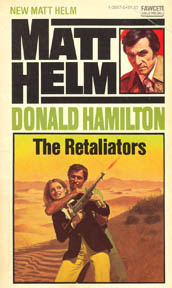
When we visited the town center of Santa Fe on a bright, warm Saturday afternoon, I was reminded of the opening of The Retaliators, when Matt Helm visits “the gleaming, modern lobby of the New Mexico National Bank.” The bank’s probably been remodeled since 1976, but it’s still there. I also thought about the following passage from later in the book:

Formerly, leaving Santa Fe southwards, you were out in coyote-and-prairie-dog country almost immediately; nowadays, the town peters out gradually through a dismal twilight zone of gas stations and drive-ins and housing developments that no self-respecting wild canine or rodent would tolerate. The desert is still out there, however; you just have to drive a little farther to find it.

If Mr. Hamilton could only see it now! Santa Fe, from any direction, is now surrounded by the kind of suburban sprawl that infects every city and town in America. I would only update his statement to say “Targets and Starbucks.” Just in the seven years since I was there last, the growth is astounding. There are housing developments on the west side of I-25 that didn’t exist seven years prior. I just hope that by the time my wife and I can move there, downtown Santa Fe doesn’t look like Baltimore!


Fortunately, growth in New Mexico is limited by the presence of Native American Reservations and National Parks. There are still vast stretches of breathtaking desert and mountains. Along with the sunshine and dry climate, you can’t help but feel happy every time you look out the window anywhere in New Mexico. I’m really grateful that Donald Hamilton, through his paperback thrillers, opened my eyes to a whole new world.

Monday, September 10, 2007

DR. WHO

I’ve been watching the third season of the new Dr. Who series on the Sci-Fi Channel, and I’m surprised to find that I’m really enjoying it. I watched the first season (or series as they say in Britain), and although the production values were way above the original show, I couldn’t quite accept Christopher Eccleston as The Doctor. He was too serious and testy for my taste. David Tennant, on the other hand, has the friendly, quirky quality I associate more with The Doctor, and he embodies a certain vulnerability that no other actor has ever brought to the role. I’m really glad that the BBC found a way to resurrect such a great character and make him relevant to the 21st century.


As an American kid in the 70s, Dr. Who was one of those mysterious legends that I read scant bits about but could never see. I knew that it was a long-running British science fiction show, but that was about it. The confusion only grew when I would see pictures of different actors listed as The Doctor. Were these misprints? How could the character get younger over time rather than older? I was really dying to see this show, but for some strange reason, it was never syndicated in the U.S.? We could have Monty Python; why not Dr. Who?

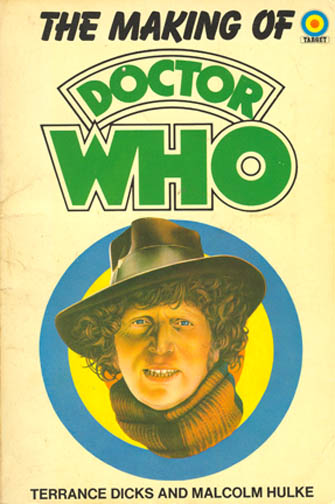
My interest was further heightened when I stumbled across a book called The Making of Dr. Who at my local comic/used book store in the fall of ‘77. Although it was a slim volume aimed at the pre-teen market Dr. Who primarily served, I found it a well-spring of valuable knowledge on this mysterious TV show from across the pond. The book explained the whole production history, from its roots as an educational show on history and science to its transformation into a monster-filled adventure show for all ages. The book also explained how The Doctor had the ability to change his physical form whenever he became seriously ill. This was a great excuse when they had to hire a new actor to fill the role, but it also allowed producers the opportunity to re-invent the character and the very nature of the show every few years, keeping it fresh and adapting to changing tastes.

At the time, Tom Baker was playing Dr. Who in his fourth incarnation. Baker would become the most famous Doctor, with his trademark floppy hat and flowing scarf standing as icons for the series. While he was certainly the most unique of the Doctors, I was more interested in his predecessor, Jon Pertwee. Although primarily a comedic actor, Pertwee was a dashing figure with an elegant pile of curly silver locks and an athletic stride. He chose to play The Doctor as an eccentric James Bond, wearing smoking jackets and frilly shirts while beating up bad guys with his Venusian Akito. Further solidifying his Bondian mystique was the fact that he spent most of his adventures on Earth, working for a group called U.N.I.T. (United Nations Intelligence Taskforce). This group fought aliens bent on taking over the planet. Who knew so many aliens would choose to start their wars in quarries near Sussex? As a 13 year old, I could ignore the silly premise. I was fascinated by this flamboyant dandy of a hero and his family of soldiers and scientists with whom he worked. My pubescent hormones also liked his young, pretty assistants which I learned of from the picture section of the book.

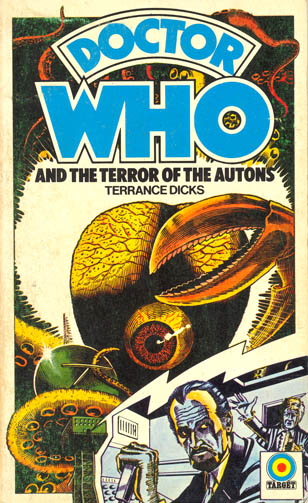
Now I was dying to see this program. I wrote to my local independent TV station WBFF-TV Channel 45, but they informed me the show was not available in syndication. My next best bet was to acquire the novelizations based on the TV serials, but since they were published in England, they were almost as hard to find as the show itself. My initial books were purchased at science fiction conventions, then the book store I mentioned earlier would get some in and set them aside for me. These short, easy-to-read novels only piqued my interest even more. I would learn later that reading the books without prior knowledge of the show was an asset, since I could make the stories as elaborate as I wanted in my mind, free from the limitations of a miniscule BBC budget. One perfect example of this was in the book titled Terror of the Autons. On the cover and in the novel itself, the Autons appear in the form of this huge, bizarre Chimeras-type creature with body parts that don’t seem to belong to the same creature. In the book, the fight to destroy this horrible monster was exciting. A decade later, when I was finally able to see the show, the monster appeared completely off-screen, presumably because the BBC was too cheap to pay for the special effects. What a let down!

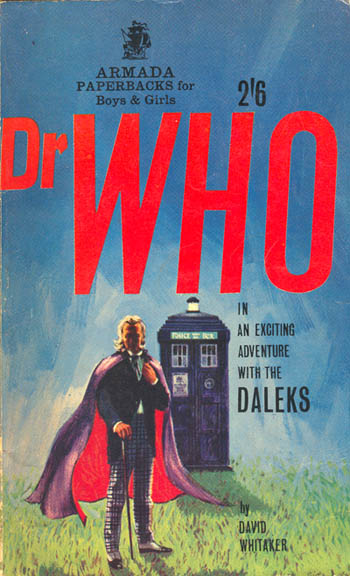
For the next year and a half, Dr. Who books were my only access to the show. Once the guy who ran the book store knew I was into Dr. Who, he even found some collectibles for me, including the original Dr. Who novel from 1964 and several annuals (the Brits were big on doing annuals of popular children’s programs). I loved all this stuff, but I wanted to see the real thing. Finally, in September 1979, the first four seasons of the Tom Baker era were syndicated in the U.S., and my friends at WBFF-TV were nice enough to carry it (I’d like to think because I tipped them off to it). It was great fun to see the show at long last, but my enthusiasm was tempered by the poor production values. In the first Tom Baker serial, there was a forced-perspective shot with an obviously plastic, toy tank in the foreground masquerading as the real thing. I laughed heartily at this pathetic special effect, but I was also pained by how bad this show was. The special effects and production values only got worse with each subsequent episode that aired. I learned later that the BBC was having severe budgetary problems during the late 70s and Dr. Who was one of the shows that suffered most from the cuts. At the time, though, I was just plain disappointed.

I still held the show in great affection during the 80s and was thrilled when Maryland Public Television started showing the old Dr. Who serials commercial free, as they were intended to be aired. By the late 80s, I was even able to see the shows with my favorite Doctor: Jon Pertwee. Ironically, while the 80s saw a spike in Dr. Who’s popularity in the states, the show was struggling for survival in Britain. They were showing the new shows here on public television along with the reruns, and I too was disappointed by the strange turn they were taking. Although the production values improved, the producer seemed fixated on modeling the show after Hitchhiker’s Guide to the Galaxy (Douglas Adams even served as a story editor for a time). While I suspect Douglas Adams was inspired by Dr. Who when he created Hitchhiker’s, I don’t believe Dr. Who was ever meant to be an absurd comedy. I think many viewers felt the same way since Dr. Who was canceled in 1989.

Fox attempted a pilot for a new Dr. Who show in the mid-90s. It wasn’t bad, and it even bore some resemblance in style to the current show, but it was just a little bland. A regular series was never made. After being such a fixture of British television for so long, it seemed strange that The Doctor would be forever gone. Then in 2005, the BBC found a way to make the old hero work in a new century, and I’m mighty glad they did.

Wednesday, August 29, 2007

BACK TO SCHOOL

In the Baltimore area, many children went back to school this week. When I was a lad, school began after Labor Day, which seems a more appropriate starting point since many see Labor Day as the unofficial end of summer. It’s also in September, the first month of fall. Starting in August is psychological cruelty, as far as I’m concerned, but I guess the local governments believe they can prove their commitment to education by making the school year a week longer. Anyway, I’m in no position to debate the state of public education. What I can do is babble on about what “back to school” meant to me.

The first week of school was a period of trade-offs. On the plus side, you had some spiffy new clothes to wear, a shiny new lunch box featuring the latest, most popular toy or TV show, and the prospect of a school year that just might not suck as badly as the previous year. On the downside, you had to get up early, start using your brain for something other than imagining, and jockey through the childhood power struggle as each kid tried to assert his or her dominance in the bloodsport of playground pecking order.

And let’s not forget the new teachers. We were usually told who our teacher would be on the last day of the previous school year. If you got one who had a bad reputation, you had the entire summer to fret over the misery that awaited you. Your only hope was to pray that this scourge of academia would be transferred, get pregnant and quit, or be hit by a bus. An unknown replacement had to be better than the known terror. Upon reflection, the teachers I feared the most turned out to be some of the best, and the ones I did not dread usually turned out to be the worst. So much for relying on gossip.

Even if you were fortunate enough to get in with a class of kids that you got along with and the teacher turned out to be pretty cool, going back to school was always just a bit sad. Your nine-month sentence had just begun. At age six or seven or eight, nine months was a lifetime, and they would prove to be quite active months. Who was ever the same person in June as one was the previous September? Changes are daily at that age, and life moves very slowly.

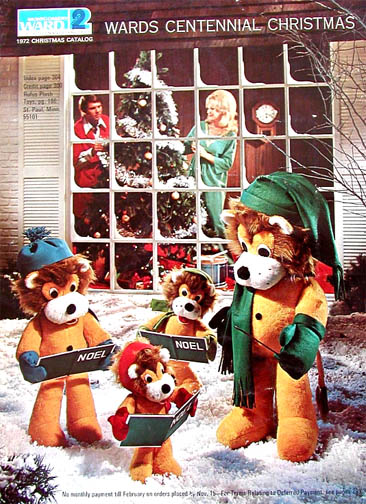
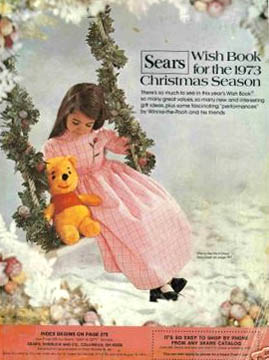
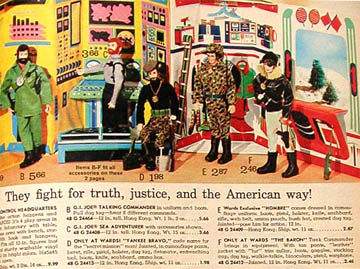
During those first few days, as I sat in that non-air conditioned classroom, smelling the formaldehyde on my newly purchased school clothes mix with my nervous perspiration, all I could dream of was Friday. The first Friday after Labor Day - the first Friday of the school year - provided the magical rewards that made the entire week of stress and suffering worthwhile. The first of those magical rewards awaited me as I dashed home from school. Sitting on the front steps, in all their red and green glory, were the Wards and Sears Christmas catalogs. In those days long before the World Wide Web, catalogs were your only home connection with the wonderful universe of toys yet purchased. I would scoop those welcome parcels up and spread them out on the living room floor, perusing them with intense scrutiny. Despite their enormous density, my interest lay with those handful of pages buried in the center of the book: boy’s toys. Ah, G.I. Joe, Action Jackson, Johnny West. Ooooh, Ward’s has an exclusive figure called Hombre! Gotta write that down.

The “Wish Books” were a wonderful escape where you could see every toy you ever coveted laid out all in one place. And for one time of the year, you could dream that you owned all of them. I knew, for example, that I could never ask for one of those motorized cars that you could actually climb into and drive around in. Those were way too expensive, and our tiny backyard hardly afforded much room for cruising, but with the catalog, I could stare and dream. December 25th seemed like a lifetime away.

An afternoon of catalog browsing nearly pushed away all memories of the hideous week at school, but the best memory blocker came in prime time. That’s when the three major networks (as opposed to the five or six medium-sized networks we have today) would present their sneak previews of the Saturday morning lineups. Usually hosted by the stars of their live action kid shows, these previews would introduce you to the new schedule of cartoons and live action shows aimed specifically at me. (Apparently, these specials continued into the 80s, but I was oblivious by then.)

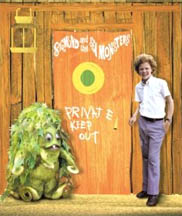
Children today, who are used to having their pick of kid-oriented cable channels spewing out specialized entertainment 24/7, can’t imagine how major these little half-hour preview shows were. Saturday mornings offered the only period of new programming aimed at children, so we needed to study these Friday night specials to figure out exactly which shows we had to watch and which shows we could skip. On NBC, when Johnny Whitaker discussed with Jimmy Osmond the virtues of tuning into Sigmund and the Sea Monsters, I took heed. Of course, when he also told me to stay tuned for Land of the Lost, I was torn because the preview on CBS already told me to watch The Shazam/Isis Hour. I could lose sleep over these decisions.

I remember in 1973, after seeing the sneak peek at Super Friends, I had a dream that I was watching the show. I envisioned the show looking like the Justice League of America comics that I had been reading. Then the next morning, I was hopelessly deflated as I saw those uber-dorks Wendy and Marvin, along with that dumbass dog, following the World’s Greatest Superheroes around and generally goofing things up. All I could think was, “Hanna-Barbera screws up another one. Why couldn’t Filmations have done this?”

After watching the new cartoon shows on Saturday morning, it was outside to play and discuss with my friends the new toys in the Christmas catalogs. Usually, the Saturday morning shows had been amply sprinkled with commercials featuring these new toys, so we now had additional fuel to fire our avarice. Of course, the first week of school was a long lost memory and the equilibrium set in. By Monday morning, we were back into the swing of things. The air cooled, the leaves changed color, and we started dreaming about our Halloween costumes.

Thursday, August 23, 2007

MINI REVIEW: KUNG-FU GRIP G.I. JOE

When Hasbro announced in 2005 that they would no longer produce the 11 ½ “ G.I. Joes, I was crestfallen. As a 1/6th scale action figure addict, I loved checking out the toy stores and the toy departments of my local discount stores to see what new creations they had come up with. That would now be at an end. I also knew that, as went Hasbro, so would go the rest of the industry. Just as they had reintroduced the 1/6th scale action figure to the market in the early 90s, Hasbro would send the signal to all the other toymakers that figures of that size were no longer hip. And I was right.


Then, a few weeks ago, I was perusing some photos online that someone had taken at the latest San Diego Comic Con and, amid all the new Transformers and Marvel superheroes, there stood new repro versions of the G.I. Joe Adventure Team with the legendary Kung Fu Grip. Not only were they reasonable facsimiles of the old figures, but they were packaged in the old, oblong boxes with the painted covers (known as coffin boxes to collectors). I nearly fell off my chair when I saw them! I wasn’t sure, however, when they would be made available or if they were only limited editions sold at ridiculous prices.

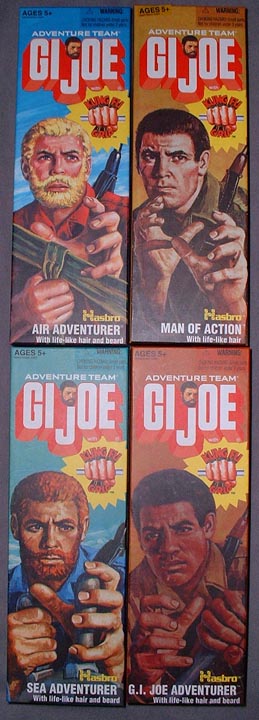
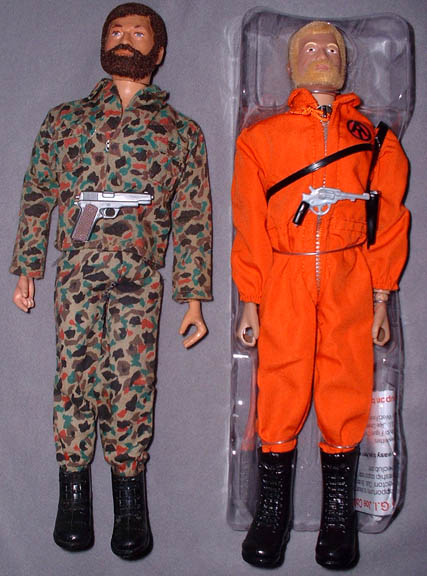
Although the Hasbro Website says that they are sold exclusively at Hot Topic and Urban Outfitters, posters on the Yahoo! Captain Action list said that they bought these new throwback Joes at their local Walmarts. Despite my aversion to that particular drearily lit, narrow-aisled discount chain, I went on a hunt for these new Joes. Unfortunately, the first couple Walmarts I visited had hopelessly understocked toy departments. They reminded me of those old Soviet GUM stores where gray peasant women fought over the last pair of pantyhose on the huge expanse of empty shelving. I finally found a Walmart that, not only had amply stocked shelves like a good capitalistic institution, but had a healthy stock of Kung Fu Grip G.I. Joes. The store had all five versions of the Joe in stock and they were reasonably priced at only $9.95 per unit. Since I already owned a vintage Land Adventurer (the guy with the brunette hair and beard), I decided to buy the other four: Air Adventurer (blonde), Sea Adventurer (redhead), Man of Action (brunette sans beard), and G.I. Joe Adventurer (African-American).

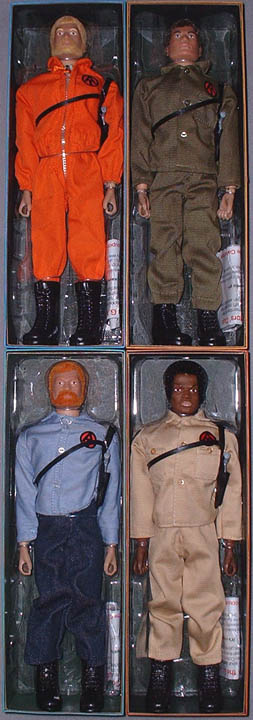
The boxes are amazing recreations of those wonderful coffin boxes I remember from my youth. They even advertise the old adventure sets they used to sell (although there is a disclaimer on these boxes which states that the sets are no longer available). I really bought these figures for the boxes, but I still wanted to see how accurate the repro figures were, so I sliced the tape holding the lids on (no shrink wrap on these retro babies) and peered inside:


I was a little disappointed that Hasbro used a clear plastic form to hold the figure in place rather than the old cardboard stays they used to use, but I understand their desire to keep the product secure. The costumes were exactly the same, and the headsculpts are pretty close to the originals. The flocking for the hair and beards seems softer and longer, and the distribution of flocking is more controlled, creating a more neatly groomed appearance.


The old figures were pretty skimpy on accessories, and these new figures are exactly the same. In addition to their unique outfits, each figure came with a shoulder holster and pistol. At first I was dismayed to see that these figures came with revolvers. I was certain that my Land Adventurer from 1971 had an automatic, in keeping with the standard military side arm. After checking with my G.I. Joe reference book, I discovered that the old Adventure Team figures did in fact come with that chintzy looking revolver. I’ve set my vintage Land Adventurer (left) next to the new Air Adventurer for comparison. Although the automatic pictured with the original Joe is not vintage, it’s a close facsimile of the pistol I recall from childhood:

While no Hasbro reproductions have ever been spot on, owing to changes in toy making practices and newer safety considerations, these Kung Fu Grip Joes come the closest in my mind to recreating the look and feel of the originals. I also appreciate that they didn’t tack on a hefty price for the nostalgia buzz. At $9.95 per Joe, you get quite a flashback for your money.

Tuesday, August 21, 2007

IT'S MY BIRTHDAY! IT'S MY BIRTHDAY!

Okay, no cabbage-patching. It's so 90s!


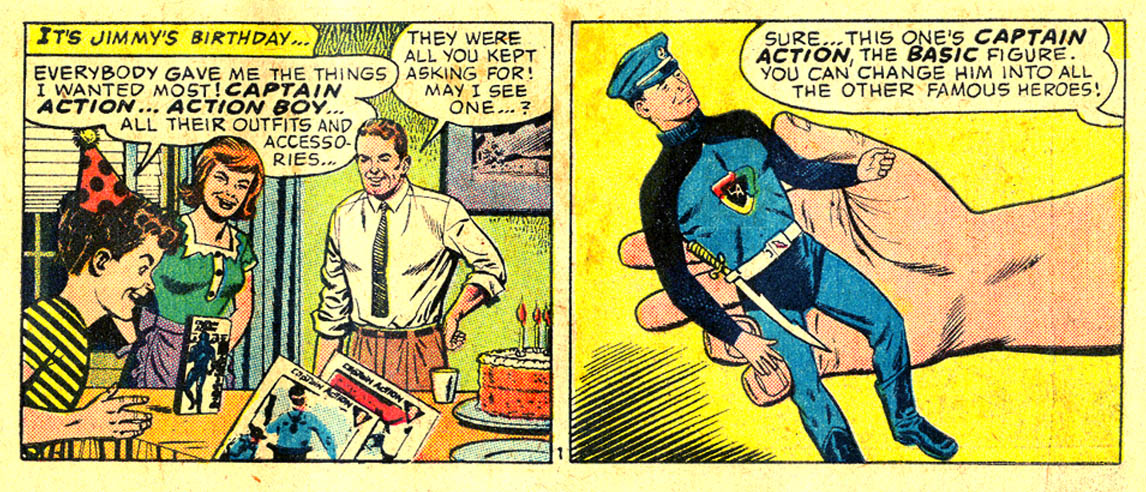
The comic page above came from a promotional comic book that was included with my Captain Action figure (click on the image for a larger view if you can't read it). When I was a kid, I hated little Jimmy. I was pretty happy with my Captain Action and his Batman and Captain America costumes, but Jimmy got "Captain Action...Action Boy...all their outfits and accessories!" Little bastard. This comic scarred me for life. Do you know how many hundreds of dollars I've spent trying to acquire what Jimmy had, and I'm still not even close! Ideal really knew how to mess with a kid's head.

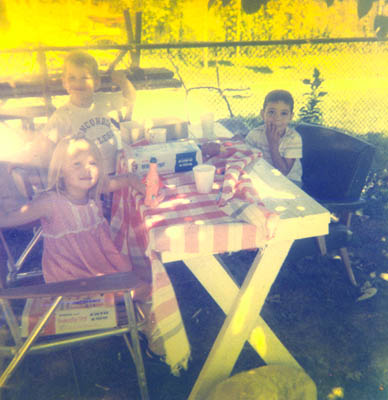
To be honest, I don't remember too much about my childhood birthdays. I vaguely remember the one pictured below, primarily because I have a photo of it. I believe it's my fourth birthday:


That's my friends Kimmie and Nick (I'm the chubby kid standing on his chair and waving). I'm playing with my Mr. Potato Head which I just received from Kimmie. She had a variation that used an orange soda bottle rather than a potato for a head. And no, there hadn't been a nuclear accident that morning. The color in the photo has gotten funky with age.

Birthday's were always bittersweet growing up. My birthday meant that the summer would soon be over and I would have to go back to school. It was Birthday - Jerry Lewis Telethon - Back to School. I still get a twinge in my stomach when I hear Jerry sing Never Walk Alone, although that may not be because of the school thing.

Anyway, I don't have much to say about birthdays, except it's kinda nice to acknowledge that you've made it through another year. It's a mile marker to show how far you've come and that you can still go farther. I guess that's pretty good.

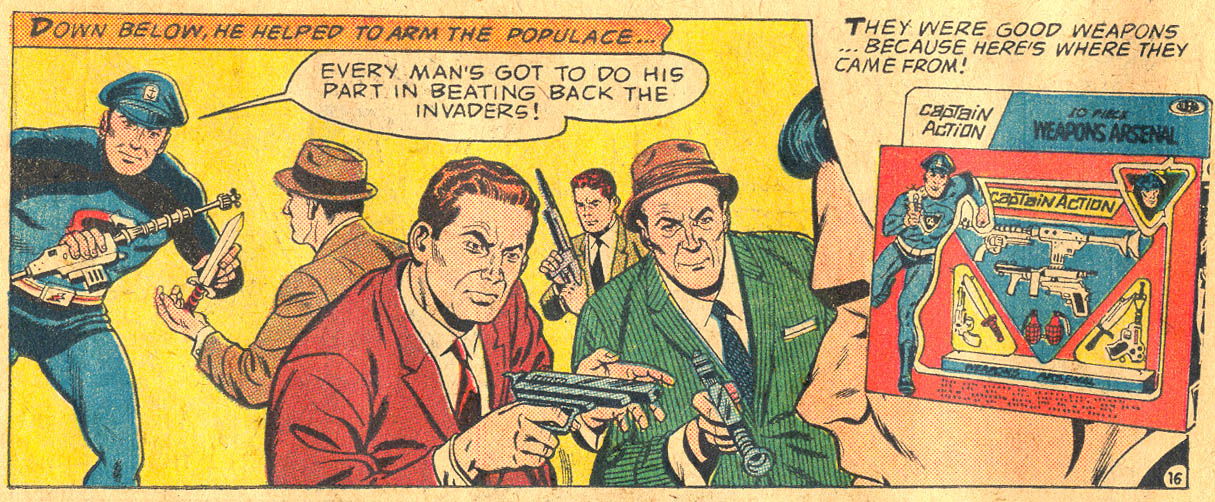
I have to show you another panel from that Captain Action comic:


Can you imagine any toy company including a panel like that in any promotional material nowadays?!! All I can say to Captain Action is, stay away from Baltimore! Our murder rate is high enough without you handing out weapons on the street corners!!

Friday, August 17, 2007

CAPTAIN AMERICA AND THE SUMMER OF ‘72

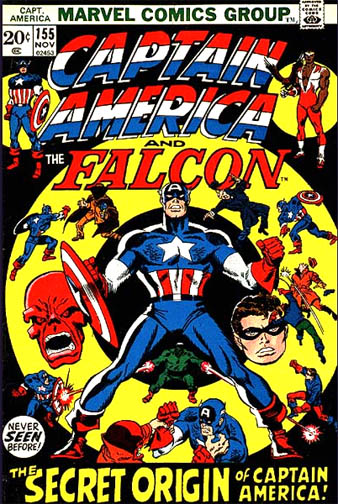
With all the recent hoopla about Marvel killing off Captain America (like they won’t revive him in another year or two), I got to thinking about my very first Captain America comic. It was Captain America #155, which also featured his then partner The Falcon. I didn't know at the that this issue was part of a very special story arc in the Captain’s Bronze Age history.


You see, Steve Englehart had taken over the writing duties for Captain America a few issues earlier, and his first assignment was to figure out a way to explain those Captain America comics that had come out during the 50s. According to Stan Lee’s revised history, Captain America had been put in suspended animation shortly before the end of World War II and revived in the 60s. However, comic fans knew that Captain America had also appeared in several issues of Young Men comics in the 50s. Who was that guy if Cap was on ice at the time? Mr. Englehart explained that another man and his teenaged student were transformed into a new Captain America and Bucky to fight the Communist menace. They were later put into suspended animation in the mid-50s, but then revived in the 70s and these two were giving the real Cap a bad reputation. The real Captain America, a.k.a. Steve Rogers, puts this bogus Captain America out of action, but the bad guy was brought back once again as The Grand Director. It’s all very complicated, so let’s get back to my seven-year-old mind and Issue #155 and the summer of 1972.

I think I grabbed this issue off the spinner rack because of the unusual cover. Instead of a standard picture of Cap beating up a bad guy, #155 had this abstract, “bullseye” design with Captain America in the center and all kinds of little things going on in the corners. Another interesting feature was that it proclaimed to reveal “The Secret Origin of Captain America.” Pretty nice way to start off your virgin reading experience with a new superhero! In fact, the flashback section of the book where Steve Rogers is injected with the super strength serum looked just like the old Jack Kirby/Joe Simon artwork. Since I’m writing from memory, I’m not sure whether it was the real artwork or an artist mimicking the style, but either way, the effect of changing styles back and forth to suggest a different era was fascinating to me. I was beginning to sense how comic books had a history and a continuity.

This became one of my favorite comic books of that summer (I was reading quite a few during those sultry months), and I re-read the book several times. I always associate that comic with the Summer Olympics in Munich, Germany. Although the games officially ran from August 26th to September 11th, they seemed to go on forever. I remember perusing my Captain America comic when Mark Spitz was racking up his seven swimming gold medals, or studying that cool flashback segment when Olga Korbut was showing that some Russian women could be cute and perky. I also remember reading Issue #155 when it was announced that eight Palestinian terrorists had taken 11 Israeli athletes hostage, killing two in their apartment right away.

I didn’t know anything about the Israeli-Palestinian conflict at that time, and I still didn’t understand it after the hostage situation ended in a bloody massacre. All I knew was that the Olympic Games were supposed to be about friendly competition amongst the world’s best athletes. There was no place for such brutality at a fun event like this. I equated the terrorists with the bullies at school who would interrupt a friendly game by pushing kids around and starting trouble. That was kid’s stuff, though, and I was consoled with the notion that things got better when you grew up. After those Summer Olympics, I knew that some people never lost their need to inflict violence and mayhem no matter how many more people desired peace. When I saw a shaken Jim McKay solemnly report that "they're all gone,” I was assured that things never really got better.

I could falsely concoct some story that I had secretly wished for Captain America to come and save the hostages, but no such thought occurred to me. Like most normal seven-year-olds, I knew the Captain was a fantasy created to fulfill our collective yearning for swift justice. I knew superheroes were not real and never could be. The only connection I made was that comic books were more fun than real life, and I retreated into comics for most of my young life. I even re-read my Issue #155 on Labor Day while Jerry Lewis, strung out on Percodan, was chastising me for not sending in money for his “kids.” Just like the Captain’s arch enemy Red Skull, that greasy-haired man in the tuxedo was repulsive and fascinating at the same time.

Thursday, August 09, 2007

NICK FURY - AGENT OF S.H.I.E.L.D.

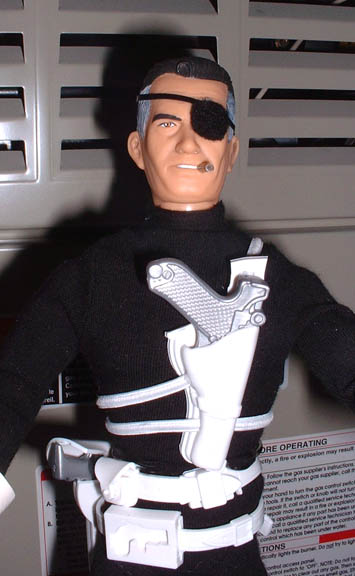
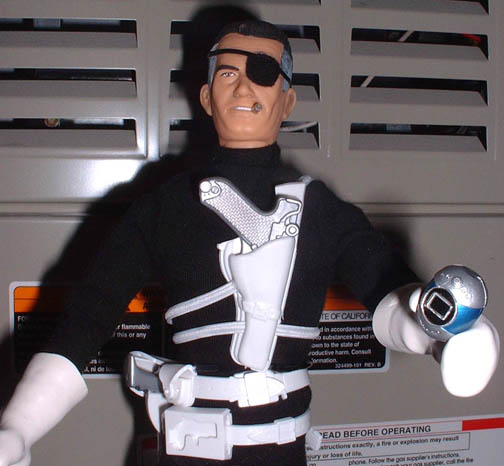
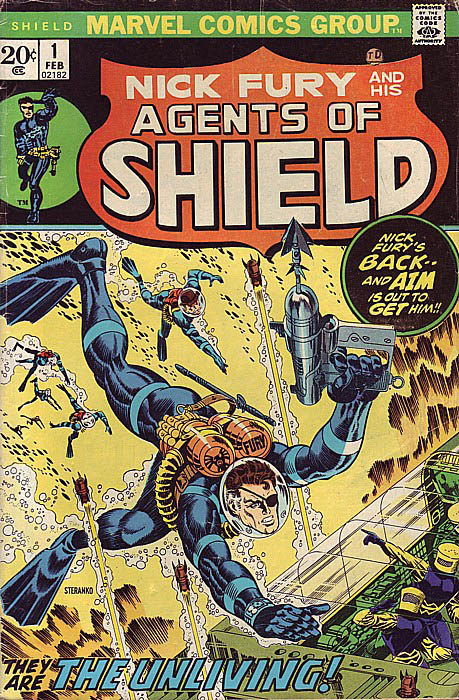
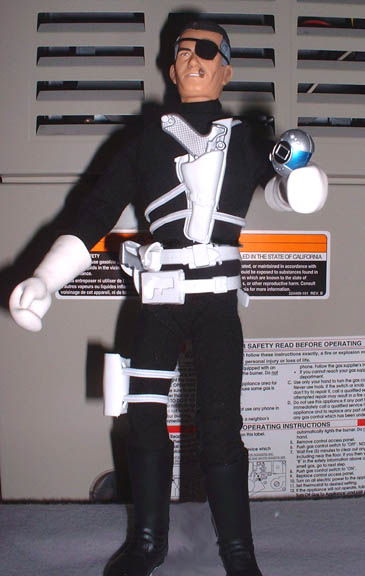
I started working on a Nick Fury action figure after I found this interesting figure on Old Joe Infirmary that had a very Nick Fury–like face, right down to the cigar in his mouth. It seemed like a relatively easy costume to create, and I always had a soft-spot for the old soldier in the futuristic paramilitary organization. I guess I also have a fondness for him because he got me through a rather harrowing night as a child.

I knew from as far back as I could remember that my father had a drinking problem. Until I was eight years old, however, the concept was completely abstract, like saying the neighbor down the street is a water skier. His behavior when drunk did not affect me as a very small child, except when my parents would fight, which was as confusing as it was disturbing. Then, one Saturday afternoon in the fall of ’72, I finally understood the seriousness of my father’s alcoholism. My mom had been a stay-at-home mom most of the time that I was little, but with inflation rearing its ugly head, she decided to take a part-time job at a catalog clearance center to make extra money during the holiday shopping season. This meant that she had to work some Saturdays, and my dad had to watch my brother and me. My dad pretended that his pride was hurt by my mom going to work and showing the world that he was not a big enough bread winner to support his family, and he chose to take it out on her (and, unthinkingly, on my brother and I as well) by getting rip-roaring drunk during the day that he was supposed to be watching us. Of course, I later realized that any excuse, like the sky was blue for example, was a good enough excuse if my dad chose to get drunk. But this was my first, full-blown awareness of my dad being drunk.

He seemed fine in the morning, and was quite happy to give me a few bucks to go off to a kids movie festival at my elementary school. My friend Linda and I spent the afternoon eating candy and watching cartoons and poorly dubbed children’s movies from Sweden or someplace, all spooling through a crappy 16-millimeter projector that would periodically eat the film and have to be re-threaded. Anyway, Linda and I had a reasonably fun time, and we wandered back to my house shortly before dinner time. As soon as I walked in the door, there was a palpable tension in the air. I can’t explain it, but I would feel it for the rest of my childhood, every time I walked into the house when my father was drinking. I recall my dad and my brother were doing some project out in the back yard, and my dad looked crazed. His fiery red hair was sticking up on end, and his normally ruddy face was completely red. He looked like the Heat Miser from The Year Without a Santa Claus, although that cultural reference was not available to me in 1972. My brother, six years older and more aware, just looked frustrated and a bit scared.

My dad came into the house ranting and raving to no one in particular, but with a gravelly, slurring voice which made it feel personal. I told Linda to go home and tried to make myself scarce until my mom returned from work. Maybe she could deal with the demon that had possessed my father. Of course, her arrival only made matters worse as he unleashed his full venom on her and this wicked job that was keeping her away from her true duty of watching the kids. Somehow, Mom kept her cool as my father kept up his non-stop rant for the entire evening. She made us dinner, washed the dishes, ran a bath for me, and put me into my pajamas while the entire time my dad spewed forth his nonsensical verbal venom. Being that this was the first time I connected the drinking with my father’s yelling, I truly tried to follow what exactly his grievances were. No matter how closely I listened, however, nothing really made sense. Sometimes he wouldn’t even finish sentences, but start a completely new line of thought just as irrational as the last. This was my first survival lesson for living with an alcoholic: they make no sense, so it’s best to not pay any attention to what they are saying, lest you lose your own sanity trying to understand them.

I’m not sure where my brother was in all of this, but my mom most likely told him to go to a friend’s house. By about 9:30, my father had completely exhausted himself and passed out on the bed. A little while later, he grumbled to my mom to go to the store and get him some cigarettes (that’s back when smoking was good for you). Willing to do anything to keep him quiet, my mom put some pants and shoes on me and we drove to the 7-11 store. Given what we had been through, I guess Mom felt I deserved a comic book and an ice cream. I quickly scanned the spinner rack of comics to settle on a choice (I didn’t need to aggravate my mom with indecisiveness). I stumbled onto something called Nick Fury and his Agents of S.H.I.E.L.D. (for you comic fans, this was the first reprint issue featuring old stories from Strange Tales). Now I had read Sgt. Fury comics before, but this was something new. It definitely was set in present day and not World War II, and this Nick Fury looked a little different from the Howling Commando Leader. I was confused, but the fancy gadgets and spy-movie feel sucked me in. I grabbed it.

When we got home, I eagerly started reading my new comic. Then the haunted, slurring voice called from upstairs, “Neal!” Cautiously, l pulled myself up the stairs and walked into the darkened bedroom. My dad remained prone on the bed. From the faint light in the hallway, I could only see my father’s eyes, and they appeared to glow.

“Where’d you and your mother go?” he croaked out, suspicion hanging on each syllable.

“We went to the 7-11 to get you cigarettes,” I replied, incredulous that he would even ask.

“Are you sure?” he groaned, like some ambulance-chasing lawyer.

I nodded, feeling guilty for no apparent reason.

“No place else?” my father added, accusingly.

“Yes, just to the 7-11,” I said, feeling more and more creeped out by the minute.

I don’t know exactly how long this interrogation went on, but he eventually let me go. Some years later, I realized that my father, in his twisted, alcoholic haze, was setting a trap for my mom. Thinking that she was having an affair, he gave her an excuse to leave the house so she could meet with the non-existent boyfriend. I guess I was supposed to tattle on her transgression, which only occurred in his sick, clouded head. Truly mindbending!

Once back downstairs, I continued to read about the adventures of Nick Fury. So intent was I to leave my current time and space that I poured myself into those pages. I was right alongside Nick Fury on whatever escapade he was having. I welcomed the challenge, for no villain could be any scarier than my own father at that point.

The next morning, I read through the comic again. I was thrilled to discover that this was, in fact, the same Nick Fury from WW II, only a little older and with cooler weapons. My dad eventually came downstairs, hung over and full of self-reproach. My parents’ whispers in the kitchen barely contained the seething tension underneath, eventually ebbing to a simmer of conciliatory repartee. I tried to block it out, focusing only on Nick Fury. It was the second survival technique I learned in so many days.

Friday, July 27, 2007

HARRY POTTER, LORD OF THE RINGS, AND ALL THIS PRECIOUS BRITISH NONSENSE

My lovely wife, like so many others around the world, became obsessed last weekend with reading all 759 pages of Harry Potter and The Deathly Hallows before anyone of her friends let loose with revealing tidbits or she saw any spoilers on the Internet. Despite all the activities around our house during the weekend, she managed to finish the book by Monday, a pretty amazing feat from my perspective when it takes me a week or more to plow through a 250-page novel. I admired her dedication to the cult of Potter, but I have never understood it.

Ever since this whole phenomenon started, I’ve had countless people stare at me aghast when I proclaim that I haven’t read any of the Potter books. I suppose because I’m into some other nerdy things like Star Trek and comic books, people assume that I would be climbing right on the back of the Potter buckboard, but in fact, I have a real aversion to what I would call British Preciousness. You know, all the cute and fuzzy fantasy characters with their goofy names and their quaint powers which come into play at just the right time so the writer can easily pull the character’s butt out of the fire without thinking of a plausible solution.

As an adolescent, I had the same visceral disgust for all the quaint and cute fantasy elements of J.R.R. Tolkien’s Middle Earth. Whenever someone started talking about gnomes and elves and magic rings and started throwing around cuddly names like Frodo and Bilbo Baggins, I just shuttered. Back then, people also assumed that I would lap up this otherworldly crap, but I had no interest and was annoyed with those who tried to convince me that I should like it. I was a science fiction person, and although some people are into both, I saw a real difference in speculating about our own future and delving into a completely made up world that never did and never will exist.

First of all, I can’t relate to it. If I have to train myself to understand who all the creatures are and what all their powers are, then figure out how their fantasy world is laid out and where they’re going, you’ve already lost me. I don’t want to do that much homework. Let’s at least deal with real humans. I know what they look like and what their not-so-special powers are.

I thought I had left such nonsense in the 80s with Boy George and docksiders, but along came Harry Potter and the return of precious fantasy goobledegook. It doesn’t help that obliging Potter cultists try to explain all of the ins and outs of Potter’s world to me. “You see, Blunderbutt can fart questions out his ass, but Harry had his sense of smell taken away by Soursox the cat, so he couldn’t answer Blunderbutt, but then Proctoplesse used his driller of doom…” At this point, I’m thinking about whether or not Jonathon Ogden’s toe will be healed by the time of the Raven’s season opener.

I thought perhaps watching the movies would make it easier to get into the Potter spirit. After all, a movie only requires that I sit and watch and listen. Little did I know how difficult such tasks would be. Now, I’ve sat through the most boring, putrid, insipid, and mind-bending movies ever filmed. I have tremendous endurance when it comes to annoying cinema. And to be fair, the Potter films are all well-made, big-budget epics with strong casts. Nevertheless, when those wizardly rugrats start rattling off ensorcelled exposition on spinning staircases while the wall hangings go about their ghostly gabbing, I feel like I’ve shown up at the wrong party and somebody’s spiked my drink. I keep wishing I can catch the next flying train back to London and see if James Bond is doing something cool.

Don’t get me wrong, if you are into it, that’s perfectly fine. I’ve certainly given up trying to explain to my wife why The Band Wagon is the greatest movie musical ever made or why Kurt Vonnegut was an amazing writer. I’m clearly in the minority with this Harry Potter thing anyway. I’m just glad that the last book is finally out and I won’t have to be subjected to anymore hype…at least until the next movie comes out or J.K. Rowlings assaults us with another phonebook-sized tome of British Preciousness.

Friday, July 20, 2007

HAWAII FIVE-O

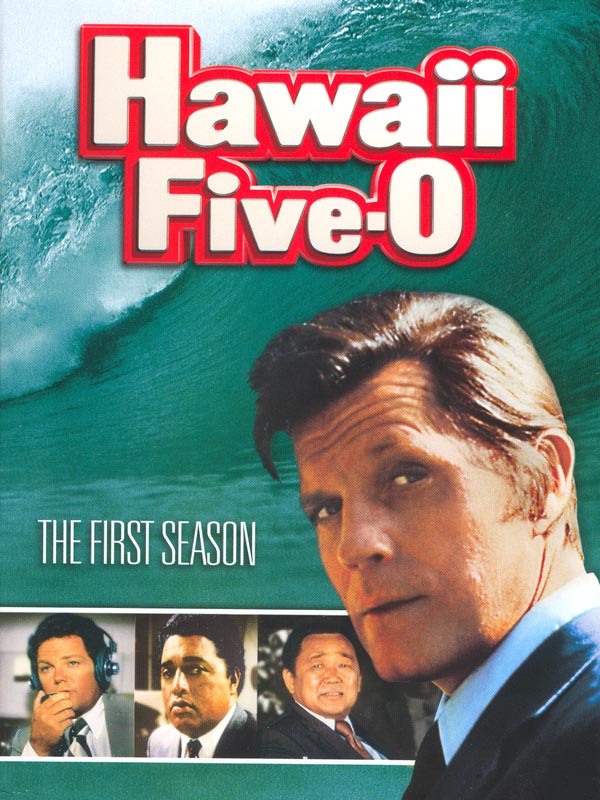
DVDs have become a wonderful way to relive childhood memories. As my lovely wife and I work our way through season one of Hawaii Five-O, it’s as if my life is flashing before my eyes, in a pop culture sort of way. For about 30 years, this show followed me from pre-schooler to working drone, and my admiration for it grew steadily along the way.

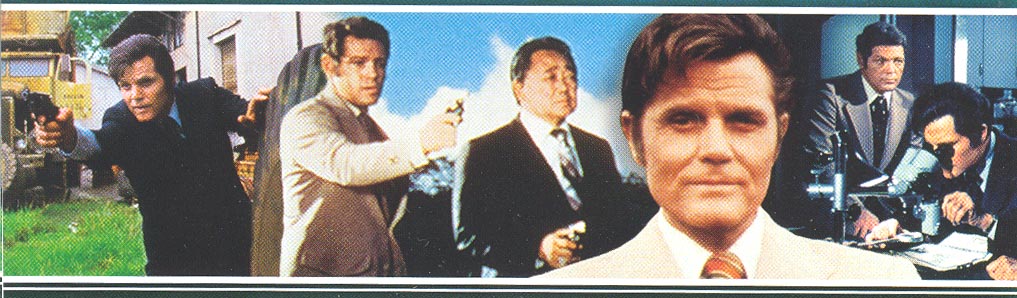
Hawaii Five-O was one of those television juggernauts, much like Law & Order is today. Beginning in 1968, the show ran for 12 seasons, holding a steady and loyal audience through the 70s. My grandmother was one of its devoted fans since it provided the kind of detective stories she loved. Just like Perry Mason and Burke’s Law before, Hawaii Five-O showed dedicated professionals piecing together clues in a methodical way until they found their perpetrator. There was really no mystery for the audience, since we usually knew whodunit before the catchy opening credit sequence began. The joy of the show was watching Steve McGarrett, Danny "Danno" Williams, Chin Ho Kelly, and Kono put together the clues and zero in on the criminal before he or she flies the coop (or the island as the case may be).

A typical episode went something like this: A creepy, sweaty villain commits a crime. Cue snazzy opening credits sequence featuring waves, hula dancers, and Jack Lord’s hair. McGarrett and the team show up at the scene of the crime and scope the place. McGarrett simmers with controlled contempt for the villain, then sends Danno out on some useless fact-finding mission; e.g., “Locate every person on the island who purchased a grape soda in the last 48 hours.” Ever the faithful bottom, Danno rushes off with a clip board. Chin Ho goes out and talks to the Chinese locals and Kono tails somebody. Meanwhile, the villain commits another crime in an even more heinous and sweaty way. McGarrett gets pissed and pounds his desk. The guys rush in and rattle off a bunch of factoids which McGarrett writes on his chalkboard. They all puzzle and stew until Che comes up from the crime lab and lays out the whole case based on fingerprints and carpet fibers. The gang rushes over to the villain’s clapboard house just as he’s about to commit another crime. They pull their .38 Specials on the sweaty bad guy and McGarrett utters the immortal line, “Book ‘em, Danno.” Big wave crashes and the music swells. The end.

Once in awhile, they would shake things up by doing an episode with Chinese superspy, Wo Fat. He was McGarrett’s arch enemy and, like Sherlock Holmes’s Moriarty, the one villain who always eluded him. I can’t say I shared my grandmother’s enthusiasm for the show while it was in its original run. Jack Lord seemed way too square for me. I preferred cool, maverick cops like Baretta and Starsky & Hutch. I thought Five-O was dull and stilted. In fact, everyone in my family couldn’t understand grandmom’s fascination for the show. We often joked about it. My grandfather, who was forced to watch every episode, just thought it was a bunch of noise and violence. He would often joke with us, “Well, I have to go home now and clean the blood out from under the TV.”

In the summer of '79, while my family was having a cook-out in honor of my grandfather’s birthday, my Aunt Kay was reading an article from the newspaper about changes they were making to Hawaii Five-O to help its flagging ratings. I was shocked. I didn’t know the show was still on the air. The article described how Danno and the boys had been replaced by younger, hipper detectives including one female cop. My grandmother seemed confident that the show would remain successful, but I was TV-savvy enough to know that any major overhaul to a series meant the end was near. That was the last season of Hawaii Five-O.

A few years later, my parents had divorced and my mom and I ended up moving into a house two doors down from my grandparents. Hawaii Five-O was shown every day at 4 p.m. in Baltimore, and since I was usually home from classes by that time, I started watching it. I became fascinated by the exotic locale, comfortable with the predictable formula, and admiring of the detectives' earnest pursuit of justice. One summer, when my grandfather was in England visiting relatives and my grandmother wasn’t up for the trip, I spent many an afternoon watching the show with her. It was the only bonding experience I ever had with my grandmother. We found something we both liked. I became obsessed with Hawaii Five-O. Then it disappeared from my local stations.

I had nearly forgotten about the show until The Family Channel decided to air the reruns during the summer of 1997. I was overcome with excitement and annoyed my co-workers to no end with my constant prattling about how great the show was. Every night at 9 o’clock, I was parked in front of the TV watching Hawaii Five-O for that entire summer. Then, once again, it abruptly disappeared. In January of 1998, Jack Lord died. I was genuinely saddened. I announced the news to my co-workers, one of whom replied, “Yeah, I hear they’re holding Wo Fat for questioning.”

Five years ago, Dreamworks announced that they were going to produce a movie version of the crime drama, but like any Dreamworks project that doesn’t have the work “Shrek” in it, they never got it off the ground. I’m still hoping to see that crashing wave on the big screen, with an updated version of the theme song blaring in surround sound. Just don’t do anything stupid like cast Ben Affleck as McGarrett.

Tuesday, July 10, 2007

WHAT HAPPENED TO THE OATERS?

I was born right when Hollywood’s western fetish was reaching its orgiastic climax. Most of the westerns which dominated television during the 50s and early 60s were losing audience and quietly going to cancellationland. The diehards, like Bonanza and Gunsmoke, lingered into the 70s, but most were pushed out for hard-bitten crime dramas and spy thrillers. The same was true for movies, where the only westerns that could generate decent box-office were helmed by the cowboy icon John Wayne or stylized to present an alternative view of the West like the Sergio Leone films.

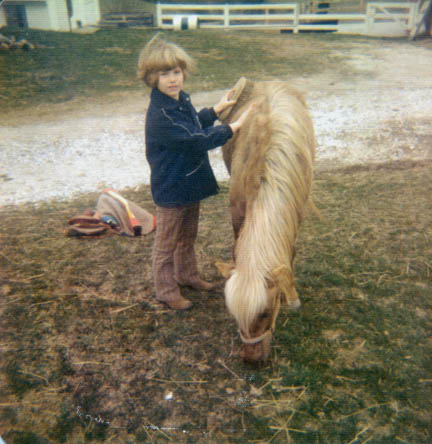
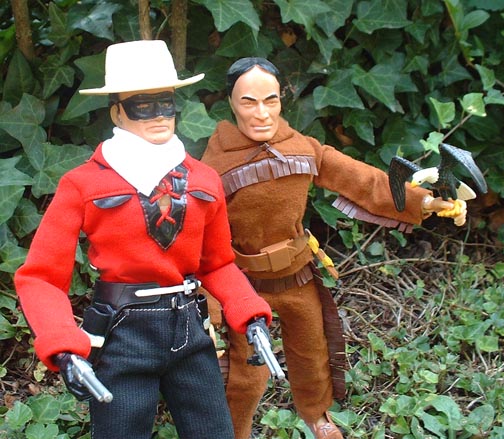
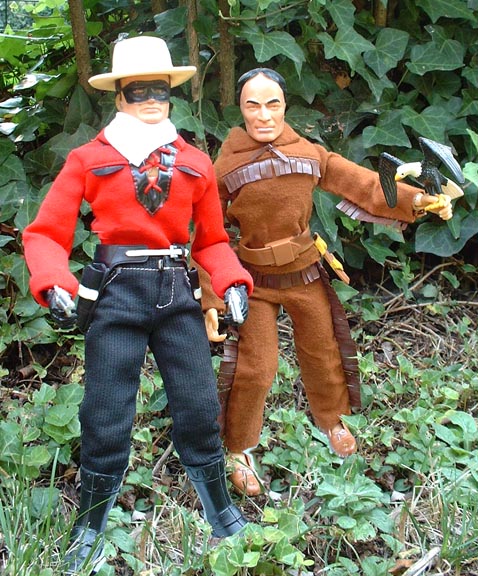
I past through the vapor trail of this fading phenomenon, playing Cowboys ‘n Indians with my friends as a virtual reflex, a boyhood tradition past down from my older brother and, quite likely, my father before him. I doubt, however, that I shared their enthusiasm for the milieu. My aunt and uncle owned a horse farm when I was young, so I did have first-hand experience with saddling horses, riding horses, and even cleaning out their stalls. Still didn’t make me a cowboy at heart. The closest I came to feeling like a western hero was when my dad got me a Lone Ranger outfit for my seventh birthday. What a thrill to wear the white hat and strap that silver cap-gun to my hip. Oh yeah, and inhaling the smoke from the barrel after the gun was fired (actually, it was a nasty little high which usually nauseated me. Don’t try this at home, kids).

My earliest western memory is watching The Lone Ranger cartoon in the late 60s. Clearly, The Wild, Wild West was the inspiration for this animated take on the radio show character since the art style reflects the look of TWWW’s opening credit sequences. Also, this Lone Ranger couldn’t be bothered with mundane issues like stagecoach robbers and cattle rustlers, instead taking on magical sorceresses, aliens, and villains in submarines. Even then, animators knew it would take more than the usual western clichés to hold the interests of early Gen-Xers.

I still could enjoy some of the fast-paced half-hour western shows from the 50s which were aired in syndication, like The Lone Ranger, Hopalong Cassidy, and The Cisco Kid. I especially enjoyed The Cisco Kid, although it was a bit of a challenge to catch it since it aired in my hometown at 6 a.m. on Saturday mornings. I would struggle to pull myself out of bed, sneak down to the living room, and turn the t.v. on at a barely audible volume so as not to disturb my family. There was something irresistible about the show, however. Duncan Reynaldo as The Kid and Leo Carillo as Pancho made an amiable pair, and the stories were lightning fast, perfect for my equally fleeting attention span.

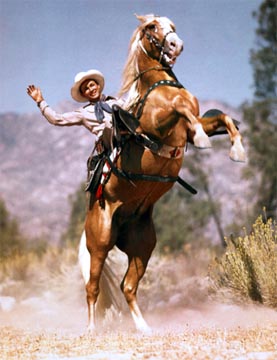
By the time I was 11, our local independent station, WBFF-TV Channel 45, started airing what amounted to an old-fashioned Saturday afternoon at the movies. Between 1 and 4 p.m. every Saturday, they would show a chapter from a cliffhanger, a short subject like Laurel & Hardy, and a western. For about two or three years in the mid-70s, I was given a crash course in early horse operas. I have to say I preferred Roy Rogers over all the rest. He had a certain sincere quality and humble demeanor that defined what an American hero should be. Most of the others, like William Boyd or Randolph Scott, had that tough talking, wise guy thing which always rubbed me the wrong way. Sometimes it felt like the good guy was ruder than the villain. Not so with Roy Rogers. He was always soft spoken, earnest, and polite, even when he was pointing a six-shooter at a cattle rustler’s abdomen. As for Gene Autry, give me a break. He looked like the pharmacist from the corner drugstore.

Aside from a revival of The Lone Ranger cartoon in the early 80s, the western motif faded from the childhood lexicon of fantasy. By then, Star Wars had taken hold of everyone’s imagination. Of course, Han Solo and the border town of Mos Eisley borrowed heavily from the iconic western images. More recently, the t.v. show Firefly and its movie sequel Serenity mixed an obvious cocktail of science fiction and western, but it never grew beyond a cult audience. Perhaps the overarching western theme, that of total freedom in a wide open land where an individual enforces his own brand of justice and forges his own destiny, is just a little too hard to swallow in our overcrowded, constantly connected, hi-def, Big Brother world. Forty years ago, people could still dream of returning to that simpler time. Maybe now it’s just too far gone to even contemplate.

Wednesday, June 27, 2007

JOHN CARTER OF MARS - THE ACTION FIGURE

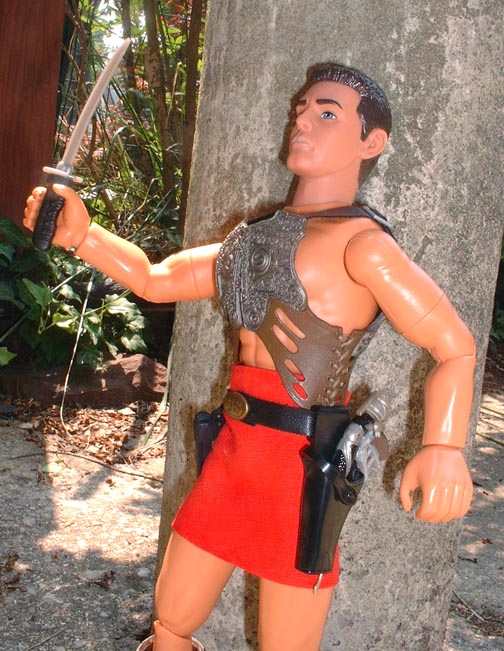
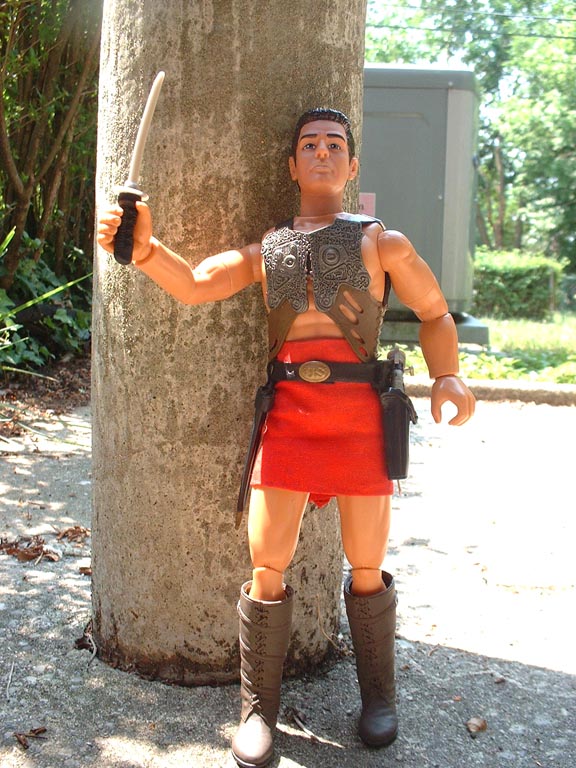
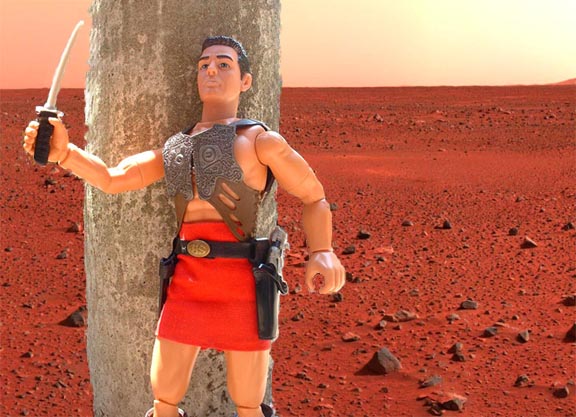
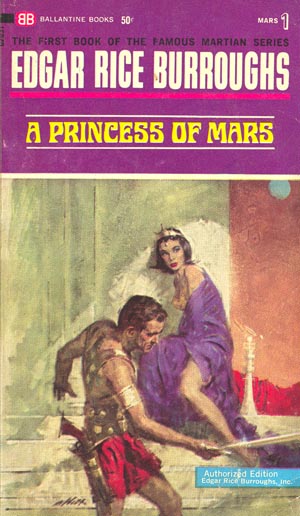
A few weeks back, I blogged about how the books of Edgar Rice Burroughs (and the related movies and comic books) had a great influence on my imagination in my early adolescence. I hesitated writing the posts since I had no toys or custom action figures to talk about, and I've tried to stick mostly to toy and action figure commentary in this blog. However, ERB was a huge part of my teenage years and still provides inspiration in my writing, so I plunged ahead and wrote what was on my mind at the time. Then I got to thinking about maybe creating a custom action figure based on the classic ERB hero, John Carter of Mars. I didn't want to go overboard and buy any new materials for the custom, but I wanted to do something that would provide at least a vague resemblance to the John Carter renderings which appeared on the old paperbacks. The artists who illustrated those covers gave John Carter a slightly gladiator look, except he carried a radium gun along with his sword. And the radium gun was usually depicted as sort of a musket/ray gun like Alex Raymond may have envisioned it. So I dug through my bins of leftover action figure accessories, old dolls, and fabric remnants. Without too much effort, I came up with what I think is a pretty serviceable figure.


I started with an old action figure I bought as part of a lot sale on eBay. He's too brawny to fit in most of the clothes I have, but looks pretty manly in gladiator-type apparel. His chest plate was left over from a Hellboy action figure, and his boots are from a Van Helsing action figure (remember that movie?). The belt came from a Civil War costume, including the scabbard (John Carter did fight in the Civil War, after all). The holster for the radium gun is of more modern design, swiped from a G.I. Joe belt. The radium gun itself was pieced together: the barrel section was the hilt from Count Dooku's light saber, and the handle came from some oddball weapon that the Van Helsing doll had. The sword was from a G.I. Joe.


For the kilt, I found some red fabric, cut it to size, hemmed it with fabric glue, and added a Velcro attachment on the back. These are the kinds of projects that are often the most fun, where everything can be pieced together from extra bits lying around. I'm rather happy with it.

Tuesday, June 12, 2007

DICK TRACY - PART TWO

During the 80s, Dick Tracy faded from my consciousness like so many heroes of my youth. As a child, I wanted to be a cartoonist like Chester Gould, both writing and drawing the stories. By adolescence, I realized that my drawing abilities would never rise above accomplished doodler, so I focused on writing and buried dreams of being a comic book auteur. Still, I continued to collect comics through high school and college, and if I came across one of the old Dick Tracy comics put out by Harvey or Dell, I would buy it and try to rekindle my old excitement for the character. The nostalgia was fleeting, however.


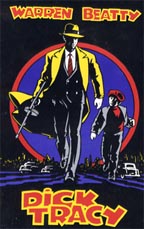
Then came the Dick Tracy movie in 1990. After the gargantuan success of the first Batman movie the year before, Disney tried to recreate the same sort of hype around their comic movie. What they didn’t understand was that, while the Batman movie was a new take on an ever-evolving comic book icon, the Dick Tracy movie was a fond homage to a character whose glory days were long past. From an artistic standpoint, I could agree with Warren Beatty’s decision to set the movie in a colorful, stylized facsimile of 1930s Gangland Chicago. Along with the Depression-era cars and furnishings, the quaint gadgets which would’ve passed for high-tech in the 30s, like the two-way wrist radio and the wire recording device, added a wonderful sense of place. Beatty chose older, veteran actors to play the famous villains, none of whom would draw much interest from a younger crowd. Madonna was the only star the kids could get excited about, but she was far from the Material Girl as she sang retro-30s inspired songs by Stephen Sondheim. All this added up to a quasi-musical aimed at an over-30 audience. While I enjoyed it, I knew this was not going to draw the same kind of lightning that the Batman movie did, and I was correct.
Given the interest in action movies at the time, I think Disney would’ve fared better had they used a more modern approach. Set the movie in present day, utilizing some of the fancy gadgets Dick Tracy was already using, like a wrist communicator/computer and the flying air cars. As a cross between Die Hard’s John McClane and James Bond, Dick Tracy could’ve gotten a new lease with a young audience. Also, Madonna would have worked better as a stripper-with-a-heart-of-gold doing video-style production numbers in slinky lingerie. Now that could’ve been a franchise for the 90s. Instead, the movie did adequate business, then disappeared without much fanfare. Only the licensed toys, books, and do-dads, languishing in bargain bins for years, provided any lasting reminder of the film.

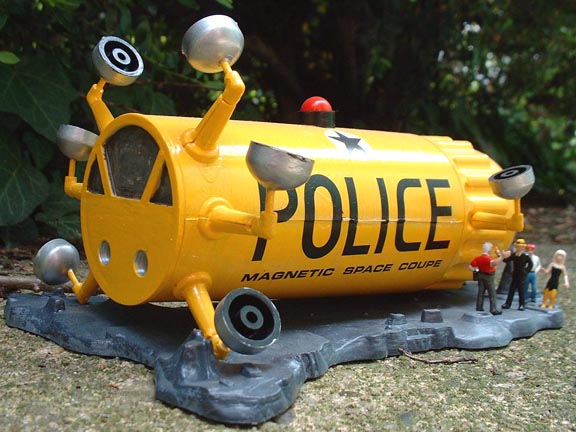
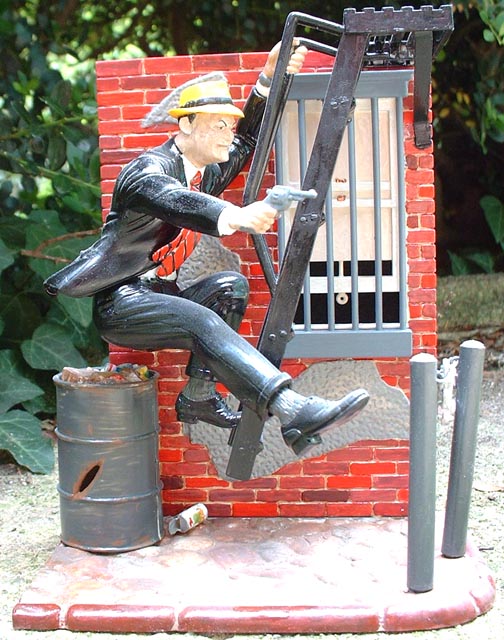
A decade later, Dick Tracy entered my consciousness again when Polar Lights, the model-making subsidiary of Playing Mantis, put out reproductions of the Dick Tracy model kits that Aurora produced in the 1960s. One kit was a really nice diorama showing Tracy jumping off a fire escape in a dirty alleyway, his gun leveled on some unseen perpetrator. The other kit was a scene on the moon featuring the magnetic Space Coupe. I had just gotten back into model building as therapy to quit smoking, so I was thrilled to work on these detailed dioramas, from painting each individual brick in the apartment building wall to putting fine touches on the teeny figures standing next to the Space Coupe.
At the same time that Polar Lights was releasing these models, parent company Playing Mantis had released a reproduction of the old Captain Action figure. In addition to recreating some of the old hero costumes that Captain Action once wore, like the Green Hornet and Lone Ranger, PM put out new outfits like Ming the Merciless and Kato. Since PM apparently had the license to release Dick Tracy models, I was hoping they would put out a Dick Tracy outfit for Captain Action. Sadly, the Captain Action line didn’t catch on and was dropped after only a few years. I’m pretty certain they would’ve gotten around to making one had the new Captain Action been a success. At any rate, it got me thinking about making my own custom Dick Tracy figure.

The outfit itself was simple enough, since Dick Tracy always wore a black suit, white shirt, and red and black striped tie. The suit came off one of those Presidents of the U.S. dolls, and the shirt and tie are from a Ken doll (I drew the black stripes on the tie with a Sharpee). I made a yellow hat for him by repainting a leftover hat from one of the Green Hornet outfits I had bought. Tracy was also known for his yellow overcoat, but that was a garment mostly seen in his pre-60s incarnation, so I didn’t feel obligated to recreate one. As for accessories, I bought a detective outfit from Old Joe Infirmary which contained a badge, gun, holster, pager, and handcuffs. For the two-way wrist t.v., I found a jazzy watch in a scuba diver set that fit the bill.


I also picked up a tommy gun separately should Tracy need more serious fire power.

The tough part was finding an action figure that resembled Tracy’s unique features. I couldn’t find one with exactly the right nose, but Cotswold Collectibles offered a headsculpt which suggested Tracy’s grim expression pretty well. After assembling my custom figure, I thought it might be fun to give him a 60s style box. Although I’m not clever enough to print boxes like some other customizers, I thought the box which contained my Dick Tracy model kit looked an awful lot like one of those old “coffin” boxes that G.I. Joe and Captain Action came in. For the outside of the box, I did some minor alterations to the graphics. On the inside, I swiped the figure stays from a Playing Mantis Captain Action box and recut them to fit inside the model box. With these changes, I had my own box for Dick Tracy.


I think kids in the 60s would’ve gone ape for an action figure like this.