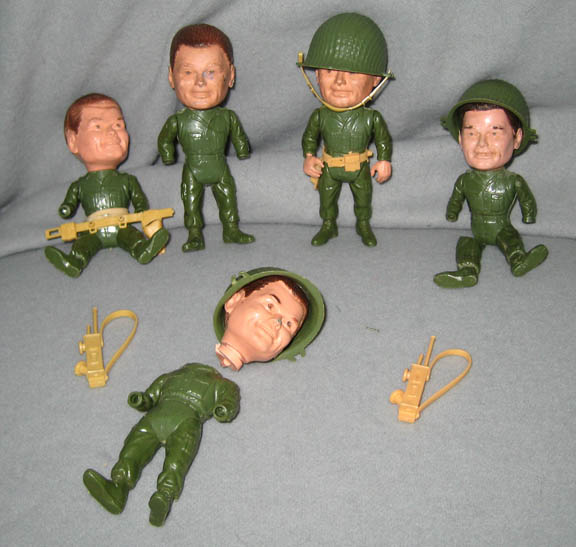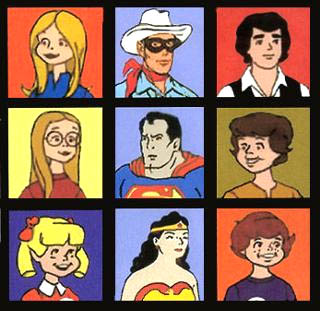
Thursday, April 03, 2008

MORE FUN WITH FILMATION

With all the warm and fuzzy nostalgia directed at the Brady Bunch over the last 30 years or so, those who were not around during the 70s might think that the Brady’s were considered the coolest thing going. Well, I’m here to say it wasn’t so. While I do admit to watching the Brady Bunch on Friday nights, I laughed at them more than with them. Even as a kid, I made fun of their Astroturf lawn, their lame clothes, and the bathroom without a toilet. When Greg got his groovy bachelor pad or pranced around as Johnny Bravo, I cringed and looked away. Yeah, I wasn’t fooled: they were a bunch of dorks.

Which makes it all the more difficult for me to figure out why I liked The Brady Kids cartoon show so much. Actually, it’s not if I put my mind to it. What made the cartoon work was that they put the kids in an environment all their own, much like Filmation was doing with The Archies (another show I really liked). No annoying parents or Alice, just the six kids, their mynah bird Marlon, the shaggy dog Mop Top, and their twin pandas Ping and Pong, all living in a tree house. This was pure fantasy with no lectures or moralizing. They even had Superman, Wonder Woman, and the Lone Ranger pop in for some episodes. As I said before, Filmation understood what kids enjoyed.
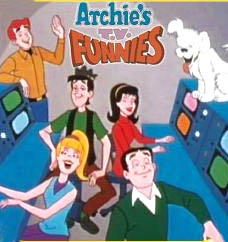
In the early 70s, Filmation was branching out from their established niche of super hero and science fiction cartoons into more comedic directions. They started with The Archies. There were several variations on the Archies theme, but my favorite show was Archie’s TV Funnies, where they filled a half hour with small snippets featuring comic strip characters like Smokey Stover, Dick Tracy, The Captain and the Kids, Nancy, and others. Of course, I mainly watched for the Dick Tracy segments, which closely followed the style of the comic strip, unlike that other Dick Tracy cartoon incarnation.

The spin-off shows like Sabrina, the Teenage Witch and The Groovy Ghoulies were even more fun. I even liked their Jerry Lewis cartoon, Will the Real Jerry Lewis Please Sit Down! even though I was not a fan of Jerry Lewis. This leads me to one of those weird epiphanies that I still remember to this day. There was a sequence that was repeated in almost every episode where the animated Jerry would look into the camera and wiggle his ears and the laugh track would guffaw with hilarity. It was that same canned laughter that they would use in all the sit-coms of the day, which didn’t really sound like laughter at all but rather like bizarre cackles and kazoo noises. It made me think of evening in the arboreal forest of the planet Mongo. Anyway, one morning as I watched animated Jerry doing this very unfunny act and eliciting the joyous eruption of prerecorded chortles, I thought how ridiculous the whole canned laughter process was. I mean, it was hard enough to accept laughter echoing from nowhere while Colonel Hogan and Kinch were standing underneath a bridge in Nazi Germany with explosives, but from a cartoon? A series of drawings that were photographed one frame at a time to create the illusion of movement? Where could the audience be in that scenario? It was probably the first time I recognized the manipulative nature of the medium, and it aged me a little bit. But I digress…

In 1973, Filmation put out what I would consider their best animated effort: Star Trek: The Animated Series. Bringing back most of the actors and writers from the original series, the show was not merely a kiddie program, but for all intents and purposes the fourth season of what would become an iconic series. Moreover, the use of animation freed them from the tight budgets of the live-action show to create aliens and other worlds which could never have been achieved on the original series. Despite the limitations of the animation, Filmation produced unique alien vistas that I still find interesting today. At the time, I was not yet a Star Trek fan, primarily because every time I tried to watch Star Trek on my local station, they would be airing one of the Harry Mudd episodes. I hated Harry Mudd and thought that these comic relief episodes were a boring waste of time. Despite my lack of enthusiasm for Star Trek, I was curious enough to give the show a chance. The first episode of the cartoon series that I saw was…you guessed it…”Mudd’s Passion” with the master of cheese himself, Roger C. Carmel, providing the voice of the annoying Harry Mudd. I never watched another episode until it was in syndication years later.

Not that this put me off Filmation shows altogether. I still felt that they were far and away more inventive than any of the other producers of Saturday morning fare. One of my favorites was Uncle Croc’s Block starring Charles Nelson Reilly and Jonathan “Dr. Smith” Harris as the cranky Basil Bitterbottom. Reilly played the title character, a disgruntled kid show host with a cast of strange sidekicks. The show lampooned the kid shows that populated local TV stations across the country (in Baltimore, for example, we had our very own Captain Chesapeake). Uncle Croc was surrounded by strangeness, my favorite of which was Koo-Koo Knievel, a puppet bird that lived in a coo-coo clock and would leap out of the clock on a motorcycle like he was making a daring jump. Okay, it sounds lame, but I was 11 and Evel Knievel was really popular back then.

In addition to the train wreck of a show Uncle Croc was conducting in the live-action world, there were regular cartoon features including Wacky and Packy, Fraidy Cat, Super Fiends, and M*U*S*H. M*U*S*H was my favorite since it was a parody of M*A*S*H, only this version had dogs. The title stood for Mangy Unwanted Shabby Heroes, a group of mounted dog policemen stationed at an outpost in the Arctic Circle. The characters mimicked their M*A*S*H counterparts with names like Bullseye, Trooper Joe, Cold Lips, Major Sideburns, and Colonel Flake.

Uncle Croc’s Block was like a less sophisticated version of Pee-Wee’s Playhouse, and its innovative style may have been ahead of its time, for the show was canceled mid-season. Its major competition was another Filmation show, The Shazam!/Isis Hour. With these shows, Filmation was entering a period where live-action would overtake its animation output. More on this era in a later post…

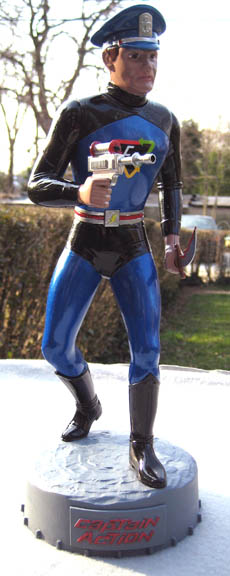
Monday, March 24, 2008

NEW CAPTAIN ACTION MODEL FROM MOEBIUS

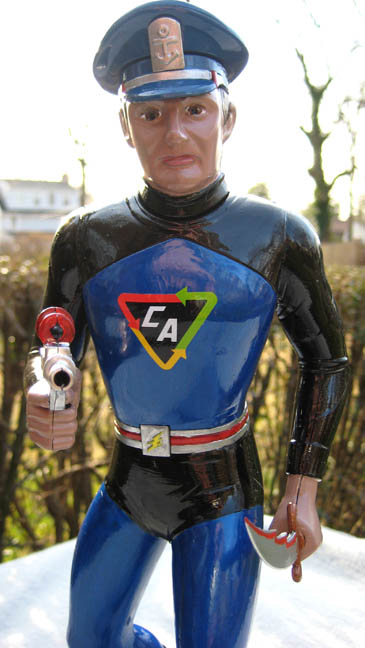
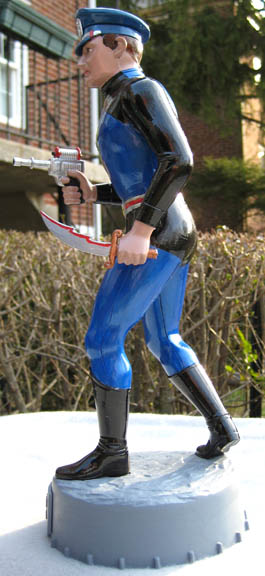
Moebius Models, in conjunction with Captain Action Enterprises, has finally released their long-awaited Captain Action model, a reproduction of the original Aurora model issued in the late 60s. The model kit mimics the original in every detail possible, from the box art to the instruction sheet provided inside, but Moebius also provides some added options for those Captain Action fans who were never quite happy with the original.

When Captain Action Enterprises first announced that the kit was in development, one issue that was discussed on the Yahoo! Captain Action list was the fact that the face on the original model did not look like the action figure or the artwork on the box. In fact, it didn't look like much of anything with its bland, simplistic features more at home on a totem pole than a figurine. In response to this criticism, Moebius Models enlisted Terry Beatty to create an alternative face sculpt which looked more like the actual artwork on the box.

A second alternative element was the creation of a nameplate for the base which used the familiar Captain Action logo. The nameplate provided with the original model used a rather bland font, perhaps to suggest a hand-chiseled design like an actual stone sculpture. At any rate, the modeler has the option of building the model with the original face and nameplate, or use the alternative elements.

I pre-ordered two kits since I wasn't sure whether I wanted to build the original version, the alternative version, or both. Due to production delays, I waited almost a full year before finally receiving my two kits, but I think it was well worth the wait. After opening one of the kits and examining the pieces, I chose to build the alternative version. While I'm not entirely convinced that the new face looks exactly like the box art (and it's certainly nothing like the action figure), it's still a much more interesting face than the dead-behind-the-eyes original.

These kits are limited editions with only 1,000 being made, so the price was far higher than your usual hobby shop kit. Therefore, I was determined to take my time and build the thing properly. Mind you, I've built many a model kit over the years and I think I'm pretty competent at it, but I can also make some messy mistakes when I get over eager and rush along in a mad dash to get it completed. The kit comes with an instruction sheet, designed by CA fan Jim Alexander, which looks remarkably like the old Aurora instruction sheets while incorporating details about the new elements. The sheet tells you to follow their point-by-point instructions to assemble the model correctly, but I have one word of advice there:

The instructions tell you to assemble the upper body section, then the lower body section, and glue the two assembled sections together. Trouble is, the bottom part of the upper body assembly has pegs which fit into holes along the top of the lower body assembly. If you allow your two assembled body pieces to thoroughly dry before fitting them together, you can't fit the pegs into the holes. I would suggest instead to assemble the lower body section first. Next, glue the face piece to the back part of the upper body, and then glue the front and back pieces of the upper body assembly together while simultaneously fitting the two halves to the assembled lower section. Otherwise, you'll have to pry the two sections apart again to glue them to the lower section. I was lucky and was able to fix the problem without damaging the pieces, but not everyone may be so lucky, so you have been warned!

Other than that small quibble, the model came together fairly easily and was a fun project. Although there are relatively few pieces, it is a big model and will require some time to paint and assemble. Be sure that you make sure pieces are securely glued together before moving on with assembly as the sheer weight of these large sections can cause them to fall out of position.

So, after 40 years of lamenting the fact that I would never have a Captain Action model to build, I finally have one to call my own, and I think it's a big improvement over the original. I'm so grateful to Moebius Models and Captain Action Enterprises for making this rare model kit accessible to those with modest budgets!

Wednesday, March 12, 2008

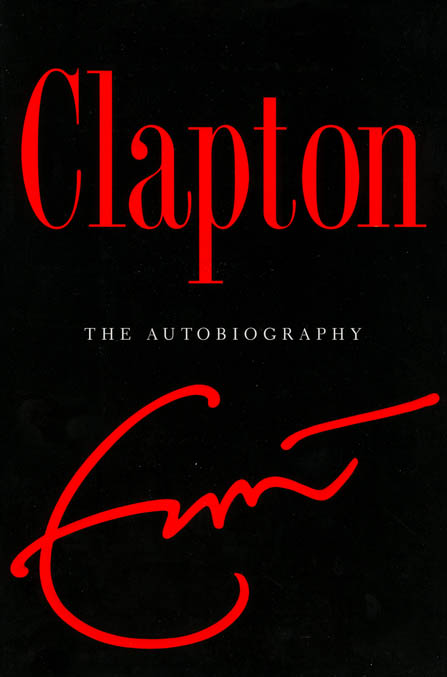
CLAPTON THE AUTOBIOGRAPHY

This entry is way off the mark for this blog, but it is my blog after all, so what the hell. I just finished reading Eric Clapton’s autobiography and I feel like a raw nerve. It’s not because of his dissertations on the purity of blues or the numerous guitars he’s owned or all the famous people he’s known, it’s because of his journey through serious drug and alcohol addiction and his emergence on the other side.

I don’t know exactly why I picked up the book. It was my wife’s book. Unlike me, she has a love for blues and blues-infused rock. I’m more of a pop or folk-oriented rock fan. To put it simply, I’m a Beatles fan rather than a Rolling Stones fan. I always found Clapton grating in interviews with the way he babbles on about the blues. I thought Cream was ridiculous. Just to have the audacity to call the band Cream (as in “cream of the crop”) was annoying enough. Then seeing the concert footage of those rambling guitar solos, which always sounded like musical masturbation to me, just sent me over the edge. Only stoners can get into music like that where the pointless runs up and down the fret board are only background noise for their altered states of being.

The gossip of Clapton's own substance abuse problems also were a negative tic in my book. I’m still wrestling with issues I have over my late father, an alcoholic who never fully broke his bond with the bottle. While I understand the disease from years of dealing with my dad and his numerous trips to rehab, I have little patience for addicts. The fact that Clapton got clean later in life was a point in his favor, but I still wasn’t sold.

I did enjoy the original Layla by Derek and the Dominos, but then Clapton had to ruin the memory by putting out that awful acoustic version which was mercilessly repeated on rock radio stations. I felt sorry for him when his son Conor met such a tragic end, but was put off by his capitalization of the event when he released Tears in Heaven. Just didn’t care for the guy very much.

Anyway, I was looking for something to read and I usually like biographies, especially about people who lived through interesting eras in pop culture, so I thought I give it a try. I almost took the attitude, “Let’s see what the man has to say for himself.” Well, he had a lot to say, and I was impressed with the way he said it.

Written in an honest, straightforward manner, Clapton takes you through his humble beginnings, his love of the blues and his pursuit of a career in music making. He also recounts the public life and musical accomplishments of which we are all aware. I completely disagree with his perspective on music, but since I’m only an avid listener and not a musicologist, I have no quibble one way or the other about such things. The part that drew me in was when he discussed his descent into heroin addiction, his recovery, and his descent into his new addiction to alcohol.

What strikes me most when I observe addicts or hear them recount their experiences is that they all exhibit the same personality traits. Their backgrounds and experiences are different, but the behavior patterns are always the same. The maddening part for me is that they are so much in denial about it. Protecting their addiction becomes more important than saving their relationships or their lives. It’s a clear path the hell and they are looking the other way.

That tendency to dismiss or marginalize the reality of it is what I find most off-putting when I hear or read testimonies from addicts. Even those who are clean may still dilute the truth as a way to protect their own self-image. Clapton takes no such easy road, and I found his honesty so refreshing. One line that walloped me like a ton of bricks was when he talked about his first wife Pattie, “However much I might have thought I loved Pattie at the time, the truth is that the only thing that I couldn’t live without was alcohol.”

After going through various rehab adventures with my dad, he managed to stay sober for 23 months when I was 12 to 14 years old. Then, during the Christmas holidays in 1978, he fell back into drinking. I had gone through his on-again-off-again drinking bouts countless times, but this time was particularly devastating, and for years I could not quite figure out why. It wasn’t until a few years ago, long after my dad’s death, that I realized what it was. On some subconscious level, I realized that my father’s need for alcohol outweighed his love for his wife and children. Pretty hard notion to swallow at age 14, so I never allowed myself to articulate it until I was an adult. However, from that Christmas onward, I treated my father as an obligation. Someone I had to love and care for because he was family. He was no longer the dad I looked up to and admired. Because his love was conditional, mine had to be as well.

The inspiring thing about Eric Clapton was that he finally got it. He’s been sober 20 years and continues to work the 12-step program that is so essential to remaining clean. This was something my father could never bring himself to do. He knew all the right things to say and how to pretend that he was okay, but he never could truly do the hard work it took to stay sober. In the epilogue, Clapton writes, “My family continues to bring me joy and happiness on a daily basis, and if I were anything but an alcoholic, I would gladly say that they are the number one priority in my life. But this cannot be, because I know I would lose it all if I did not put my sobriety at the top of that list.” If only my father could have learned that lesson, maybe it would’ve all been different.

Seeing the travails of addiction through the eyes of the addict, depicted in such an honest and forthright way, was a harrowing and ultimately cathartic experience. I even came to realize that Tears in Heaven may have been helpful to others rather than a crass way to cash in on tragedy. This is so much more than just another pop star tell-all. I would recommend it to anyone who is wrestling with addiction or who is struggling with a loved one who is addicted.

Tuesday, March 04, 2008

THE TALE OF TWO WHITMANS

If you were a kid in the 70s, Whitman Publishing Company was probably your publisher of choice whether you knew it or not. Whitman produced the Big Little Books, along with various hard and soft cover books aimed at a pre-teen audience. Most of the books were based on movies, TV shows, and comic book titles which were sure-fire favorites with kids. They even repackaged unsold comics into economical three-packs, sealed in flimsy plastic bags that hung from spinner racks in discount stores and book stores. Chances are, if you did any reading as a kid back then, you read Whitman books.

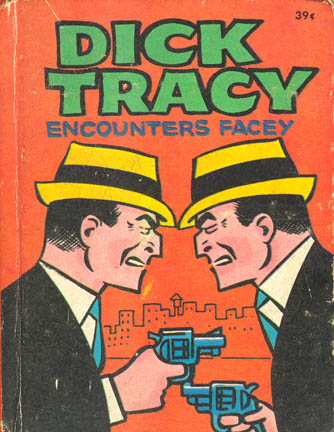
During the summer of ’72 when I crossed the threshold into age eight, I was becoming an avid reader. I was at that awkward reading stage, however, where basic books like “Where the Wild Things Are” and “Cat in the Hat” didn’t really cut it anymore, but I wasn’t quite ready for the Hardy Boys. This is where Whitman bridged the gap. I was already hooked on comic strips and I particularly loved Dick Tracy. During one of my numerous trips with Dad to the Read’s Drug Store (now known as Rite Aid), I found a Big Little Book on the magazine rack titled, Dick Tracy Encounters Facey. This was the first Big Little Book I had ever seen, and I was curious about it. Not only was it quite small (perfect for my pudgy little hands), it had an illustration on each right-hand page and text on each left-hand page. It reminded me of the picture heavy children’s books I was familiar with, but it also had a grown-up feel with its blocks of text and chapter breaks. Just flipping through the book, I saw enough pictures of interesting action and familiar faces like Dick Tracy and Sam Catchem that I had to have it. Another round of begging with my dad, which wasn’t so bad since he was usually pretty amenable to buying me reading material.

My dad had to stop off at a couple more places before we went home, so I stayed in the car and read my curious little book while he did whatever. Funny how you could leave an eight-year-old alone in a car back then and not fear any trouble. Different world.

Anyway, I finished reading the book in a few days (always was a slow reader even then). The story involved a criminal known as Facey who was a master of disguise. He started out doing petty crimes for larger criminal gangs, then decided to go solo as his confidence grew. Meanwhile, Dick Tracy and his partner Sam Catchem worked the case, did the forensics and so forth, but couldn’t catch a break. Facey became so self-assured that he even had the guts to masquerade as Tracy himself, walk into the police station, and take away evidence that might lead to his capture. Of course, like all criminals, he pushed his luck too far when he kidnapped the daughter of a world leader. Tracy and Catchem finally tracked him down to his lair and busted him. Facey disguised himself to beat the rap, but Tracy blew his cover by putting him in a shower and washing off his make-up. Pretty entertaining stuff.

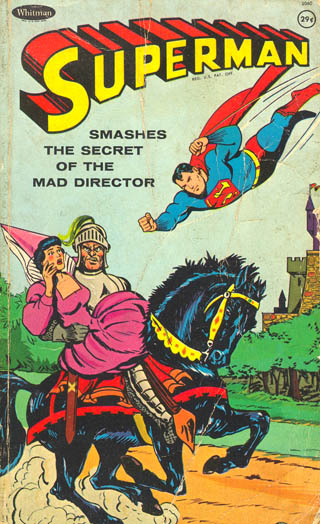
I was so taken with the book that I had to tell my best friend Nick about it. When I ran into him, he was carrying a book himself and this one had Superman plastered on the cover. Titled Superman Smashes the Secret of the Mad Director, this book was the size of a regular, mass-market paperback, but it used a similar format as my Big Little Book. That is, lots of pictures and large print, but here the text was on the bottom half of the page and the illustrations were on the top of the page. Only difference was this book had black-and-white drawings rather than the full color pictures my Tracy book had. As I told Nick about my book, he told me how cool his book was as well.

“When you’re done with it, maybe we can swap books?” I suggested.

He agreed. I felt so mature. We would exchange books and each get to read two books rather than only one. How civilized. I was growing up. A few days later, on a Friday afternoon, Nick handed me his Superman book and I quickly dashed into the house to retrieve my Dick Tracy book. I was so thrilled. I had never read a Superman story before, not even in comic book form. I made a point of reading the book as fast as I could so that I wouldn’t hang onto the book for too long. That would be rude after all, and we were acting all mature and stuff. The entire weekend, I carried the book around with me and read through a few pages every chance I got. Even while I was playing with my friend Johnny, I would pull the book out of my back pocket and read while he went to the bathroom or ran an errand for his mom. Sunday night, I barreled through the rest of the book and felt quite pleased with myself for finishing a 166-page book so quickly (never mind that half the book was pictures and the print was extra-large).

Looking back, the story was one of the oddest things I’ve ever read. A famous movie director in the Otto Preminger/Eric Von Stroheim mold comes to Metropolis to film a Medieval epic. The tyrannical director, subtly named Max Malice, has a reputation for creating period films of tremendous accuracy, so Clark Kent and Lois Lane are assigned to cover the filming of the movie. They finagle bit parts on the film, Lois as a handmaiden and Clark as a serf, and report for costume and make-up. They are surprised to find out that all actors must wear contact lenses. Clark notices that Malice is putting special lenses on the cameras as well. Somehow these special lenses cause all the reality elements (e.g., city skyline, crew, light stands, etc.) to disappear and the flimsy sets suddenly appear solid and totally real. Also, all the actors lose their memories and actually believe they are in the Middle Ages, except Clark of course, whose Kryptonian physiology must be resistant to the magical contact lenses. Malice dresses as a court jester and encourages the actors to act out the scenes he wants. He talks a couple of thuggish types into fighting Clark and later, the brutes kidnap Lois. Incensed by this attack on his woman, Clark can no longer stay in character, so he transforms into Superman to stop the thugs from running off with Lois. Meanwhile, Max Malice decides that capturing Superman’s escapades on film are more interesting than his original script, so he races madly all over the set in a motorcycle, filming the action from the sidecar while a helicopter captures the action from the air.

As Superman fights with the thugs and generally destroys the set, Malice screams that he is capturing the best footage of his career. What kind of film he could cobble together from these random shots of destruction, I have no idea. Anyway, Superman finally puts an end to the whole mess by burning the film with his heat vision. The rest of the story deals with Clark trying to convince Lois that he’s not Superman even though he disappeared during the whole time that Superman was around. Stupid woman falls for it again.

Although my eight-year-old brain accepted the story at face value, my 43-year-old brain gets a headache from it. How these lenses could make plywood sets look like solid rock and make people believe they were in the Middle Ages is thoroughly mindboggling. Also, Max Malice’s playful ruse to get some good action for his movie seems slim justification for Superman to trash the set and burn Malice’s film stock. Malice slinks away like a chastened criminal without questioning the fact that Superman has cost the studio millions of dollars in damages and lost time. As usual, Superman uses excessive force under the slightest provocation and gets away with it. Little wonder I was Batman fan.

Okay... so I finished the book and excitedly went to Nick after school that Monday to tell him so, hoping that he had also finished my book and we could swap back. Nope, Nick hadn’t had a chance to read it yet. I feigned understanding; we were being civilized after all. I told him he could hang onto it as long as he needed, but I was clever enough to keep his book hostage in the meantime. Days turned into weeks. Nick kept making excuses. After awhile, I gave up asking. I still had his book and sooner or later, he would want it back. I just had to be patient.

Flash forward 35 years: I still had that Superman book collecting dust on the book shelf. I didn’t like it and didn’t particularly want it, but I wanted my Dick Tracy book back, so in some insane twist of logic, I held onto it. That book sat on four different book shelves in four different houses. I haven’t seen Nick in at least 25 years, but I kept hoping my Dick Tracy book would show up. He would finally cave into the guilt and send it to me in an unmarked, plain brown wrapper. I, in turn, would track him down and rightfully return his Superman book. It would be the mature thing to do.

Christmas 2007: Among the gifts that my lovely wife had given me, there was a small, hard package. I curiously peeled away the wrapping. It was a slightly worn copy of Dick Tracy Encounters Facey. I gingerly, but joyously, flipped through the pages, instantly recognizing the illustrations and the story. There’s Facey getting his makeup washed off in the shower! Tears brimmed around my eyelids. I was reunited with a long lost friend. My thoughtful wife had brought my torment to an end.

Nick, you still aren’t getting your book back.

Thursday, February 28, 2008

THE EXCITING WORLD OF FILMATION

Any child who was glued to the TV in the 60s and 70s the way I was became intimately familiar with the handful of cartoon producers who dominated the TV animation market. And just as people develop brand loyalty with everything from cars to toothpaste, I was a devoted Filmation man. I admit I watched everything, and I did have a few favorites produced by those other guys, but Filmation consistently put out material that was right up my alley. Now that many of these shows are being put out on DVD, complete with audio commentary by producer Lou Scheimer and others from the Filmation family, I’ve been reliving some of these wonderful childhood memories.

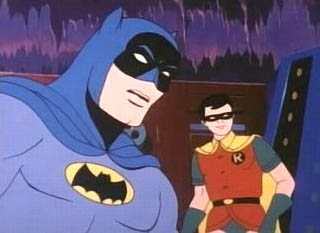
My earliest memories of Filmation go back to their first Saturday morning cartoon show, The New Adventures of Superman. I was too young to remember when they first aired, but I saw episodes aired as repeats on Sunday afternoons. I do recall, however, the premiere of The Adventures of Batman and Robin which came along a couple years later (the animated show couldn’t air until after the live-action show was canceled). I was a huge Batman fan and was thrilled to death that an animated version was coming to Saturday morning. The frenetic opening credit sequence, with its quick cuts and flashing primary colors, really got me jazzed right off the bat (pardon the pun). I also loved their new Batmobile design. Far more sleek and serious looking that the George Barris creation, it looked like the muscle cars I saw zipping up and down my front street at the time.

Despite the initial excitement over the opening credits, I remember feeling a bit let down by the stories. The format was essentially the same as the Superman show (seven minute adventures with fairly simplistic storylines), but the animation seemed even more limited. Also, I don’t recall the first episode featuring any of the major villains like The Joker or The Penguin. I could be wrong about that, but that was my memory. I couldn’t put my finger on it, but there was something not quite right about the show. Having seen some of those cartoons on YouTube recently, I think I was probably disappointed with the slow pacing. Even with limited animation, Superman could still generate excitement because he was saving jet planes from fiery crashes and shifting the Earth’s orbit. Batman was simply gathering clues and catching crooks. That was great in the live-action show when you had Adam West and Burt Ward chewing up the scenery, but those strangely immobile close-up shots that Filmation was so famous for just didn’t inspire much excitement. Nevertheless, it was Batman, so I stayed loyal.

Around the same time, I remember seeing their movie tie-in shows, Journey to the Center of the Earth and Fantastic Voyage. I was especially fascinated with Fantastic Voyage, just as I had been with the movie. What I liked about the animated series was that they had a flying ship called the Voyager rather than a submarine like in the movie. With Voyager, they could travel anywhere in their miniaturized state. And the hero had an eyepatch! That was really startling to me (I hadn't yet seen Nick Fury, Agent of S.H.I.E.L.D.). The closing credit sequence (yes kids, they used to have those once upon a time) was especially atmospheric, showing clips of the empty, darkly lit miniaturization lab while moody music played; probably the gloomiest credit sequence of any Saturday morning show in history.

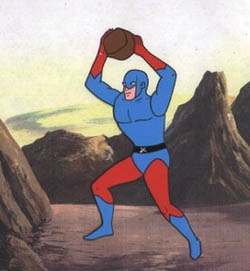
I didn’t discover the Aquaman TV show until the early 70s when it was in syndication. One of the local independent stations ran the show early on Saturday mornings before the network shows started. This was really my first exposure to Aquaman since I never read his comic books. Although I was only lukewarm about Aquaman, I loved the back-up stories featuring other heroes of DC’s line-up like the Flash, Green Lantern, Atom, Teen Titans, and the Justice League of America. The miniaturization thing must’ve really captivated me back then because I was especially fond of the Atom, and I got a real kick out of seeing the whole gang in the Justice League of America sequences. Again, legal issues prevented Batman from being in this animated JLA, but he never had much to do in JLA anyway.

All these action/adventure shows really made Filmation stand out in my mind. I was never a fan of the anthropomorphic funny critters that Warner Brothers and Hanna-Barbera cranked out. I liked science fiction and comic books, and that was Filmation’s source material, at least in the early days. By the early 70s, they started branching out. More on that later…

Friday, February 22, 2008

SECRET ORIGINS OF A COMIC FAN

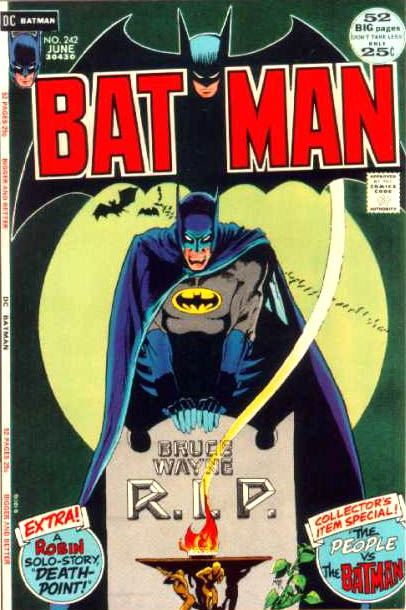
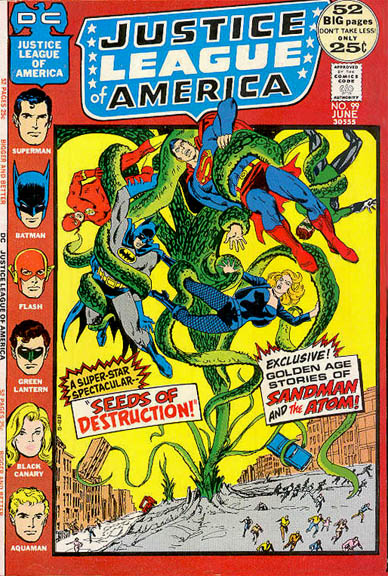
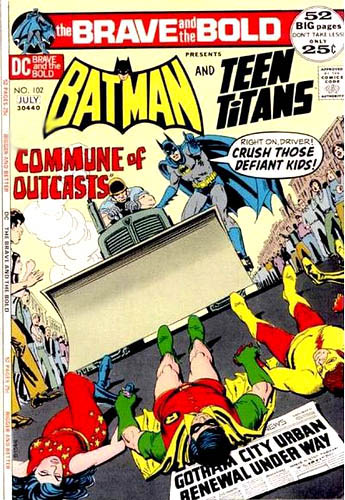
When last I blogged, I was talking about the moment I became a serious comic fan. It was the spring of 1972 and I had just gotten three comics while shopping with my dad and brother: Batman #242, Justice League of America #99, and The Brave and the Bold #102 featuring the Teen Titans. Something in the spring air made me absolutely ecstatic about these comics, and I wanted to read more.

When I went back to school after the weekend, my second grade teacher, Ms. Morningstar, announced that we could bring comic books in to class to share with our classmates during our recess periods. I couldn’t believe it! I would get to read more comics without having to get my parents to buy them. I also wanted to share my excitement for the comics I had read, but I didn’t wanted to bring in those three comics I had just gotten. I was young but no fool; those classmates of mine would destroy my new comics in no time.

I decided to dig out my old Batman #220 and #227 as soon as I got home from school. When I finally found them, they were even more worse for wear than I remembered. Batman #220 had a huge tear across the cover, which I clumsily repaired with Scotch tape. Since I thought this might be the last time I would see the comic, I read through #220 one last time. It was exciting to discover how much my reading skills had improved and that I could follow the story much better than I could a year earlier. I noticed that one character in the story was named “Sloan,” which sounded to me like a person in a TV crime show or on one of my mother’s soap operas. Suddenly, comics seemed like real adult entertainment and not silly kid stuff like the Saturday morning cartoons. You have to realize, I had a much older brother, so I was in a real hurry to grow up, at least intellectually.

I took my battered Batman comics into class, which I felt gave me the legitimate right to paw over the comics that the other kids brought in. I was immediately drawn to a copy of The Brave and the Bold #60 featuring my new favorites, the Teen Titans. Unbeknownst to me, this was only the second appearance of the Teen Titans and the first time Wonder Girl joined the group. Wonder Girl was a bit of a fudge on DC’s part anyway, since the original Wonder Girl stories were of Wonder Woman as a girl, like Superboy was Superman as a boy. For Teen Titans, however, she miraculously became the daughter of Wonder Woman, putting her in the same time frame. Of course, I learned all this later. At that moment, I was just blown away at how different these Teen Titans seemed from the ones I saw in my B&B #102.

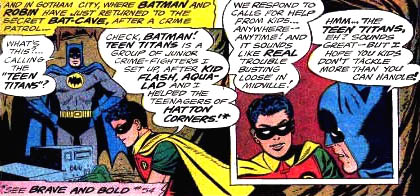
While the Teen Titans, as they existed in 1972, were older, more independent adolescents like The Mod Squad, the early Teen Titans reflected their younger, more subservient roles as pint-sized sidekicks to their big league partners. There was one page in B&B #60 were each Titan bids farewell to their older partners before they go off on their mission. I was particularly struck by the brief conversation that occurred between Batman and Robin:


Although it was just a couple of panels, I was thrilled to see Batman and Robin looking and interacting just like they did on the TV show. I quickly realized that this book was from the mid-60s, obviously a hand-me-down from an older sibling to one of my classmates. It was so fun to see Batman and Robin like this, rather than the separate crime fighters they had become in the early 70s. This comic made me yearn to see more older comics so I could piece together the entire history of my heroes. The comic bug had settled in my heart for the long haul.

During the summer of ’72, I asked for a comic book every time my dad and I stopped by a drug store or convenience store, which was frequently since he was a heavy smoker and always needed cigarettes. I often wonder how much my dad’s nicotine addiction contributed to my comic book addiction. At any rate, I read all kinds of comics that summer, including some Marvel titles like Spiderman, Captain America, and Daredevil. But it was another Teen Titans issue that really touched me.

Teen Titans #40, “Spawn of the Sinister Sea,” had Aqualad betray his fellow Teen Titans because the daughter of this bad guy had seduced him. To keep Aqualad from causing any more trouble, the other Teen Titans chain him up. There’s one panel where the chained Aqualad is crying out his anguish, so strong is the power of the girl over him. To my seven-year-old brain, this was serious drama. I was enthralled with comics. I kept reading comics. I didn’t realize that I had become a comic fan, or that such a thing even existed, but I certainly was one. It took a few years before I fully embraced my passion.

Thursday, February 21, 2008

THE DAY I BECAME A COMIC FAN

I mentioned in my previous post about my first encounters with comic books as a child. My big influence was the Batman TV show, which led me to ask for Batman comics even though I couldn’t read them. As I learned to read, I was better able to appreciate them and, by the spring of 1972, I was turning into a serious reader. So on a warm spring evening while I was out shopping with my father and older brother, I came across a comic spinner rack that changed my whole life.

It’s funny the things your brain chooses to remember. This would have otherwise been a fairly ordinary moment hardly worth registering, but I remember it as clearly as any wedding or funeral or holiday. It was a Friday evening, but still light out due to the longer spring days. I tagged along with my dad and brother Craig on a trip to the Eastpoint Shopping Center (a few months later they put a roof over the whole complex and turned it into one of those newfangled malls). Dad and Craig did a lot of things together and I would feel left out, so every once in awhile I had to assert myself and insist on going with them. Then I would be disappointed because they would talk about stuff that I was too young to understand and I would still feel left out. By the time we stopped into a drug store, I wandered off to check out the toys and stumbled across their comic spinner rack. I was immediately struck by the cover of Batman #242. The caped crusader was looking grimmer than ever, looming over the grave of Bruce Wayne (?!!), the glow of the eternal flame by the gravestone lighting Batman’s countenance from below for dramatic effect. Bruce Wayne dead but Batman alive? How could this be? I had to get this comic.

No sooner did I grab the Batman than I also spotted Justice League of America #99. I had never seen a JLA comic before, but I was familiar with the super heroes from the Saturday morning cartoon shows. This book had all the heroes together in one comic, including my fave Batman. Flipping through the pages, I also saw that they had reprinted old stories of the Atom and some guy named Sandman. This Atom looked different from the one I knew, and this Sandman guy was completely strange. Also, the artwork had a certain crudeness to it that I found appealing. At this point, I was reading the daily comic strips and I fancied doing my own comic strip when I grew up. My own attempts at drawing a comic strip were nowhere near as accomplished as the artwork I saw in these new comics, but the rough simplicity of these Golden Age stories gave me hope. I wanted this book too.

I was about to track down my dad when I noticed a third comic that I couldn’t resist. The Brave and the Bold #102 featured good ol’ Batman again along with some group called the Teen Titans. All I knew was that Robin was part of the group. Robin and Batman in a comic story together! I hadn't seen that in my brief comic reading life, so I had to see what this was all about. But now I was holding three comic books in my hand. I had never asked for more than one comic book at a time in my life. Also, these comics were 25 cents each rather than 20 cents like some of the others. As I nervously worked out my sales pitch, Dad and Craig appeared.

“I can’t make up my mind between these three books,” I whined. “I know they’re 25 cents each, but they have extra pages in them. And they have some old stories like from when you were a kid.”

“Well, let’s get them all then,” Dad stated, as if this was a no-brainer.

Thus was the difference in perspective between an adult and a child. To me, spending 75 cents on comics was an extravagance. To my dad, 75 cents was two or three packs of cigarettes which he would burn through in a day. Looking back, my dad never denied me any reading material, even if it was a hardcover that might have cost four or five dollars back then. He wanted me to read, which was a noble and understandable motivation. I didn’t see reading as something that was helpful to my development at the time; I equated it with play, and I knew how hard it was to coax my parents into buying me certain toys. Toys and books were the same in my mind, requiring equal amounts of persuasion. If only I had understood the difference in our perspectives then, maybe I could’ve talked him into getting me more comics.

Anyway, he bought me the comics and I spent the whole weekend pouring over them. There’s something about spring that fills your spirit with renewed energy and joy, and somehow I associated that burst of euphoria with the reading of those comics. Batman #242 kicked off what would become the now famous multi-part story with Ras Al-Ghul and the League of Assassins, which was reprinted in its entirety as a giant-sized treasury book. I was completely hooked with this opening chapter. The JLA story was less memorable for me, but it still got me interested in reading JLA for a couple of years. But that The Brave and the Bold with the Teen Titans really got me excited.

The young sidekicks of DC’s heavy hitters (Robin, Kid Flash, Aqualad, Speedy, and Wonder Girl) worked together as a team like my TV favorites, The Mod Squad. This particular story had something to do with the Titans fighting Batman and his uptight, establishment grown-ups over some urban renewal project. Just like the kinds of hip, relevant stories they did on The Mod Squad. This was cool stuff to me. I was really digging comics.

I went back to school after that weekend filled with a new enthusiasm for reading. This is where the serendipity came in. Often as the school year would draw to a close and the weather would get warmer, teachers would start to get a little more permissive. In this case, my second grade teacher Ms. Morningstar told us that we could bring in comic books to class that we could share with our fellow classmates during recess periods. Hot dog! We would be allowed to read comics in class! Still more tomorrow….

Wednesday, February 20, 2008

THE MAKING OF A COMIC FAN

I can narrow down the time I became a comic fan to one specific moment when I was seven years old. It was in the spring of 1972 and I found myself captivated by a comic spinner rack in a drug store. From that point, my future geekdom was assured. But before I get to that, I should step back a couple years.

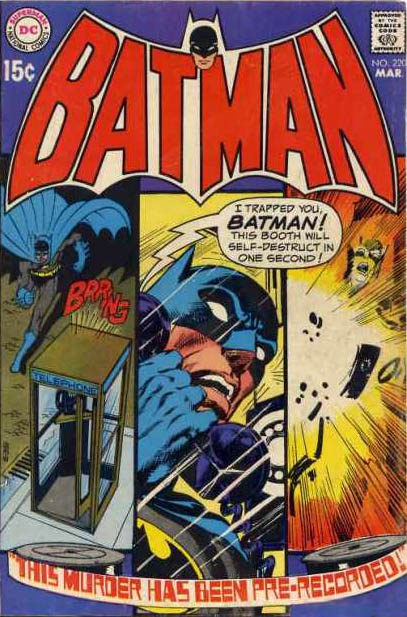
I owned my first comic books before I could read. Having been weaned on the Batman TV show, I always had a love for the caped crusader and, if I saw a Batman comic on the shelves in a drug store or convenience store, I would instinctively point to it and whine my desire for it simply because it had Batman’s face on it. The first Batman comic I remember owning was Batman #220, This Murder Has Been Pre-recorded! This was the winter of 1970 and I hadn’t learned to read yet, but I liked looking at the pictures. And boy, those were some pictures! This was a radically different Batman from the one I saw on my TV screen. He had taller ears on his cowl and his lean, sinewy body made him appear more menacing and stern. Robin was nowhere to be found, so forget about any friendly, “ol’ chum” banter. And while I couldn’t read, I could tell that this story was more like a crime thriller a la Mannix or one of those Quinn Martin crime shows. It was different, a little scary, but way cooler.

Several months later, I talked my dad into buying me Batman #227, The Demon of Gothos Mansion! I was just beginning to read at this point and I wanted desperately to comprehend what was going on in this book, but since none of the dialog said “See Spot run” or “Dick has a red ball,” I was hopelessly lost. But I loved those pictures! This issue was along the lines of a gothic horror story, and for the first time I understood how Batman’s persona was supposed to be utilized. He was the personification of a bat, a symbol of the supernatural and feverish nightmares. (I believe the cover was inspired by the cover of Detective Comics #31, channeling those earlier roots.) Batman was meant to be dark, brooding, grim, and mysterious. I was catching on. Suddenly, Adam West was looking pretty lame.

The back-up story featured Robin, now a college student living on campus and, in his spare time, patrolling the college town of Carthage as Robin, the Teen Wonder. This new environment put Dick Grayson/Robin right in the thick of hippies, drug pushers, and war protesters. Quite a long way from “Holy priceless collection of Etruscan snoods!” but I liked it.

My six-year-old brain was piecing together the evolution from the TV show to the then-current comic. Years later I discovered that, had I bought a Batman comic even one year earlier, it would’ve looked pretty similar to what I had seen (and was still seeing thanks to syndication) on TV. However, with the rapid changes taking place in American society in the late 60s, Batman’s campy television image had become an embarrassingly passé fad, plummeting in popularity just as quickly as it had risen two years before. No one was interested in that old Batman, least of all the baby boomer writers who were taking over the direction of DC characters in the late 60s and early 70s. The metamorphosis of Batman from 1969 to 1970 was beyond dramatic, and I was jumping in right as the transformation had reached completion.

So while I liked these Batman comics, the fact that their reading level was slightly higher than my own prevented me from really enjoying them. By second grade, however, my reading ability accelerated rapidly. So much so that I was moved to the highest level reading class in my grade to encourage my growing interest in books. By the spring of 1972, I was reading whatever I could get my hands on. That’s why that drug store spinner rack fascinated me so much. I was ready to tackle those comics. More on that tomorrow…

Tuesday, February 12, 2008

ACTION FIGURE PROJECT - CAPTAIN ACTION ATV CONT'D.

The creation of the Captain Action ATV continues...


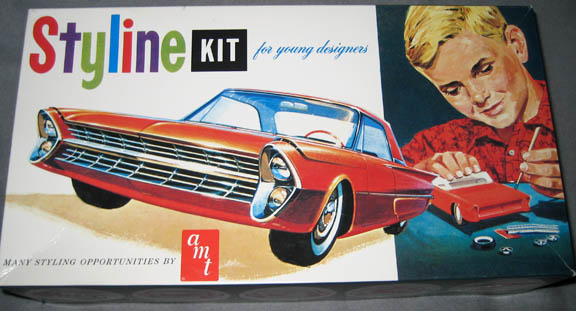
About 10 years ago, while I was attempting to quit smoking, I returned to my adolescent hobby of model building as a way to get my mind off my nicotine addiction. At the time, there were several retro model kits on the market, including the one pictured here from AMT. The kit allowed you to create a customized car by taking a generic 1964 Ford Galaxie and attaching to the body any combination of trim pieces and decals provided in the kit.


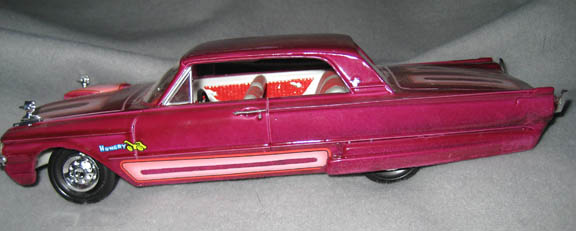
Not only did I get to play George Barris and make my very own customized car:

but I’ve continued to uses pieces from this kit to customize other models and action figure projects. The kit came in handy with my Captain Action ATV project.

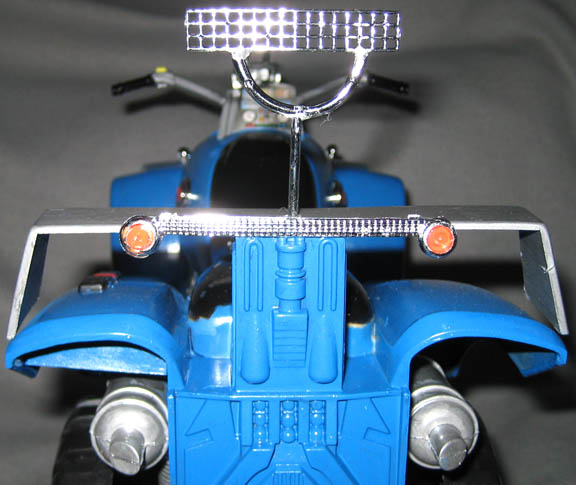
With the kit, I was able to create a radar assembly on the back spoiler and add a set of brake lights. It disturbed me that this ATV toy did not come equipped with proper safety features like brake lights. I know Captain Action wouldn’t drive any vehicle without brake lights.

I also added additional side vents for the turbo-charged engine, and front fog lights. Along with the rocket launcher mentioned in my previous post, I think this ATV is starting to shape up into an appropriate action mobile for the Captain. My final step will be to add some flashy decals to jazz up the design. And I need to figure out what to do for the headlamps. More later…

Wednesday, January 30, 2008

ATTACK OF THE MECHANICAL TOYS!

As I've mentioned numerous times in this post, my brother is six and a half years older than I. That meant that his childhood toy references were very different from my own. His early Christmases were filled with the mechanical toys of the 60s, while my own were filled with the action figures of the late 60s and early 70s. He often talked about the guns and rifles and secret agent gadgets that he had, but as far back as I can remember, I don't recall seeing any of those toys in the house. It was as if my brother gave up on toys at an early age.

His friends, on the other hand, still had old toys hanging around their basements and attics, and I loved to sneak a peek at these artifacts of toy past. There were three brothers who lived in a large house behind our own smaller house, and my brother hung out with all three of them since they were pretty close in age (one a little older than Craig, one the same age, and the third a little younger). The youngest brother, Barry, was the most mild mannered and was the only one who actually treated me like a friend rather than a pesky younger brother. Every so often, he'd give me one of the old toys that was lying neglected around their house. This was such a thrill for me because these were not toys I could buy in the store and none of my friends would have anything like them.

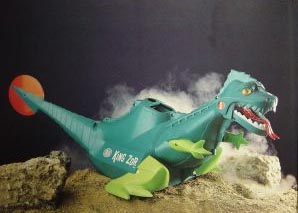
One day, I was playing in the alley that divided our house from Barry's house. I saw Craig and Barry walking down the alley toward me, carrying this green thing between them. When they got nearer, I could see that it was a plastic dragon or monster of some kind, like Godzilla.

"Here Neal," Barry said, "this is for you."

My eyes grew big and I stammered and stuttered the usual things like, "Are you kidding me?" and "Is this a joke?" They kept reassuring me that Barry was actually giving it to me to the point where I think Barry was becoming annoyed and was tempted to take it back. Before that could happen, however, I grabbed it and helped them drag it back to my house. It was green with chartreuse legs and a long, pointy tail that wiggled a bit. It clearly was battery powered, but I don't recall ever putting batteries in it. I would just drag it around and growl like I was attacking Tokyo.

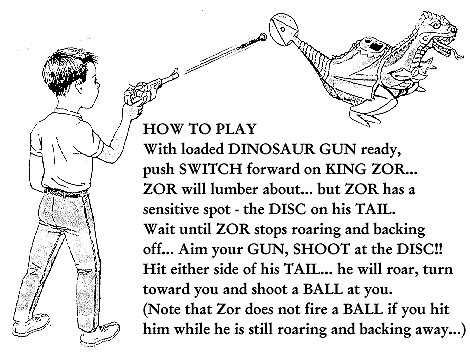
Only recently did I discover that this creature was called King Zor, made by Ideal in the early 60s. From what I can gather, it also came with a dart gun that I never had. The idea was that King Zor would shoot marbles out of its back at you while you tried to stop it by hitting the end of its tail with a dart. Toys with flying projectiles didn't seem to bother parents back then. I didn't experience any of this excitement with my King Zor anyway; I just loved lugging this heavy chunk of plastic around and pretending to menace the world.

I discovered this commercial for King Zor on YouTube. This should provide a good glimpse at how the toy worked:


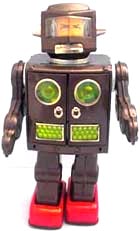
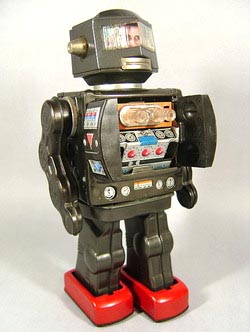
This was one of the few mechanical toys I ever owned. By the late 60s, the scene had shifted to action figures and items that didn't require so many batteries. I do recall, however, having a couple of those Japanese robots. These clunky metal monstrosities lumbered along while flashing lights and making irritating grinding noises. I believe it was Christmas 1969 when my aunt and uncle gave me a robot known as Super Astronaut. He was a variation on another robot known as Attacking Martian Robot, the gimmick being that after taking a few steps, the robot would stop, open the doors on his chest, project twin machine gun barrels, then fire these machine guns as its torso spun around 360 degrees. Here's a video to show you the robot in action:


At the time, I found the whole display rather horrifying. I had seen enough war movies to know the destructive power of machine guns, and this robot not only had two, he could spray the entire room with bullets without even taking a step. As I played with the robot in my aunt and uncle's living room on that cheery Christmas evening, I could just picture my entire family being mowed down in a blood bath of human carnage. The part that I found especially creepy was that the robot had a human face. This impassive male countenance peered through the glass shield of the robot's head. My five-year-old mind imagined that a person had been imprisoned in this robot body, thus losing all his human compassion, and was coerced by some alien force to annihilate humans indiscriminately.

Needless to say, I didn't play with this toy very much. And I've always been a little curious as to how the grown-ups felt about such toys. I suspect they didn't give it much thought. To them, it was probably just a mechanical toy that moved and lit up and made noise. Nothing too terrifying in that, is there?

Tuesday, January 22, 2008

NEW ACTION FIGURE PROJECT - PART TWO

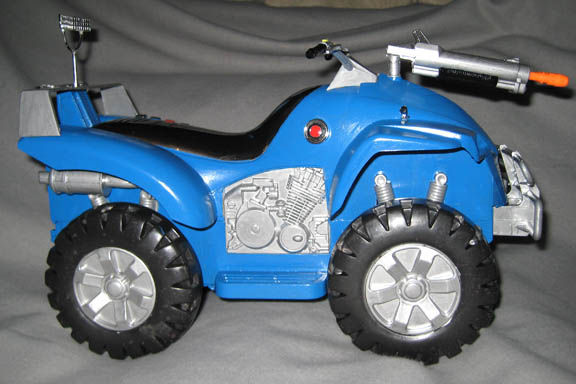
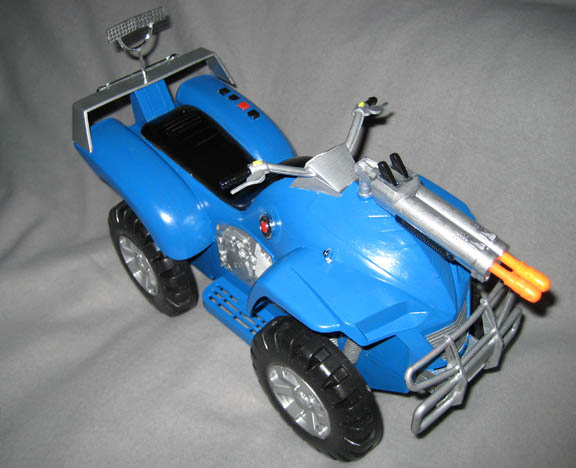
In a previous post, I talked about a 1/6th scale all-terrain vehicle (ATV) that I bought as a post-Christmas clearance item at my local drugstore. I decided it might be fun to turn this ATV into a special vehicle for Captain Action. Here’s what has happened so far:

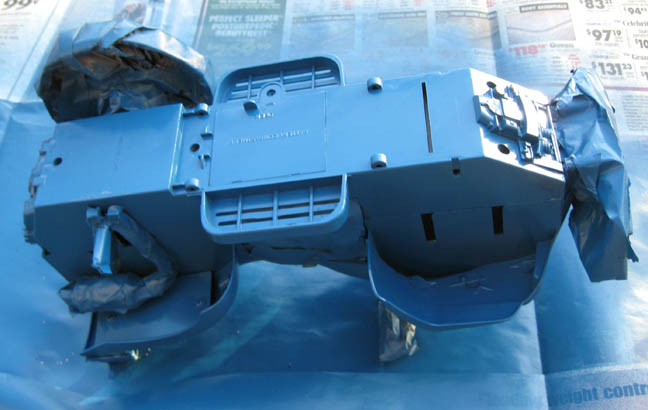
I went to my local hobby shop and picked out a color of spray paint which I thought matched the color of blue found on many Captain Action accessories. I then removed as many parts off the body of the ATV as I thought I could without damaging the vehicle. For the rest of the parts I didn’t want to paint, I masked them with masking tape and newspaper. I caught a break with the weather and was able to spray paint the body outdoors on a nice 60 degree day. However, because I had to mask significant sections of the ATV, there were several spots where the paint spray would not go.


I checked the paint manufacturer’s Web site and discovered that the color I chose only came in spray cans; I couldn’t get a bottle of the same color for touch up. After kicking myself for not checking this sooner, I decided to try a trick from my adolescence and spray the remaining paint into a clean glass bottle to condense the liquid into a form that I could brush on. Unfortunately, the trick was not as effective as it was 25 years ago as the paint in the bottle was runny and too thin to spread. I tried adding other paint to it and attempting a close match, but that proved futile.

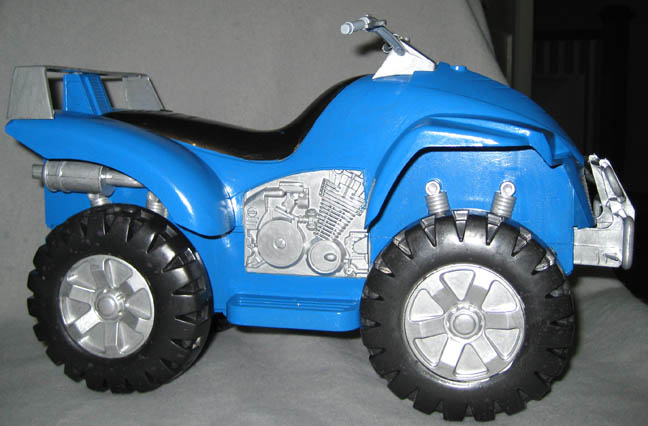
Back at square one, I decided to buy a couple different bottles of blue paint and mix my own color. Then I brush painted the entire ATV. Although not as smooth and professional looking as spray, I think it turned out pretty good.


My next concern was finding a device to replace the swiveling machine gun that was originally mounted on the ATV. I thought the oversized assault weapon was way too aggressive looking for Captain Action, so I rummaged through my boxes of left over action figure accessories to find something more suitable. I found a rocket launcher that came with my 12” G.I. Joe Cobra Commander figure from a few years back. The device reminded me of the rocket launchers on Captain Action’s Silver Streak vehicle. I had to modify it to fit on the front of the ATV, however. It turned out that the butt of the launcher was a separate piece from the launcher itself, so I was able to carefully remove the butt without any damage to the launcher. I then cut off the mounting stalk from the original machine gun and affixed it to the back of the rocket launcher. Once I paint it, I will mount it on the ATV.


Next, I’m going to have to come up with some additional trim pieces and stickers to jazz up the look of the vehicle and make it scream, “CAPTAIN ACTION!” Stay tuned…

Thursday, January 17, 2008

HI-TECH - 70s STYLE

Having a brother half a dozen years older than I created a bit of anxiety in the growing up department. From my earliest memories around age four up to age 13, I was always envious of what Craig could do or what he had that I didn’t. Perhaps that’s why I spend so much time as an adult reminiscing about my childhood; I didn’t really appreciate it when I was experiencing it. Instead, I kept yearning for that time when I would be Craig’s age and could do what Craig did or have what Craig had. I was forever projecting six years into the future. A perfect example of this age envy is in the area of electronics.

My brother was always a bit of a tinkerer (and still is, but the equipment has changed from transistors to microchips). So while I was asking for G.I. Joes and Big Wheels, he was asking for stereos and recording equipment. I remember his massive chrome and black reel-to-reel tape recorder, about half as tall as I was at the time. Something so huge that did so little would seem absurd today, but in the early 70s, this was what every swinging bachelor on TV had on his book shelves. It looked cool, but was really intimidating for a small kid.

That’s why Panasonic was the cool electronics company for anyone under the age of 12. During the early 70s, Panasonic (or National Panasonic) put out devices that were completely in line with the “mod” aesthetic. Instead of boxes made of chrome and black plastic and faux-wood, their products were molded out of brightly colored plastic in smooth, curvy shapes. They looked like toys, but still played music or recorded sounds like the more sophisticated devices did.

The first Panasonic product I remember coveting was those spherical transistor radios. They looked like one of those laser-spouting balls that Luke Skywalker trained with, but re-imagined by Walt Disney. My friend Linda had one, and we would loll away many a summer’s afternoon listening to the crackly AM signals floating out of the ball’s tiny mono speaker. The cool bonus to this radio was that it had a chain attached to it for easy portability. We didn’t use the chain to carry it around, though. We held the radio up by the chain and spun the little sphere around while songs were playing. The repetitive Doppler effect made every song sound like Tommy Roe singing “Crimson and Clover.”

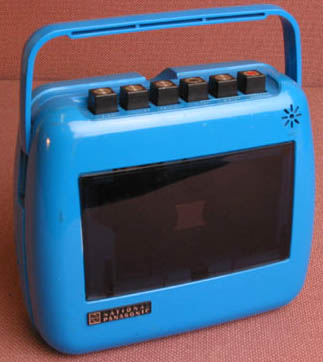
A few years later, Panasonic came out with portable cassette recorders that were shaped like small boxes with rounded corners. The day-glo colored plastic made the thing virtually indestructible, and the retractable handle and light-weight design was perfect for a kid to tote around. Best of all, it had a built-in microphone so you could record your friends and family without them knowing. As soon as I got my little recorder for my tenth birthday (which was bright red, not blue like the one pictured), I set about recording my friend’s candid conversations. This was shortly after Watergate, after all, and there was a certain air of espionage about the whole thing. I remember capturing one gem from my friend Kevin while we listened to my other friend Nick speak to his Greek family a few yards away.

“Ya’ know what?” Kevin declared. “I can’t understand one word of that Greek stuff. NOT ONE WORD!”

Really, Kevin? It’s like they have a different word for everything, huh?!!

Later on, I struck up a friendship with a school mate, Johnny, and we would hang out at his house after school. With my trusty recorder on hand, we would make up the audio equivalent of Mad Magazine movie and TV parodies. And as hard as it might be to imagine, we were actually less funny than Mad Magazine, although we thought we were hilarious.

The process went as follows: we would pick a movie or TV show to satirize, think of an opening gag, turn on the recorder, state the gag, turn off the recorder, think of the next gag, turn on the recorder, say the gag, turn off the recorder, and so on until we had the whole show. When it was played back, it sounded something like this:

(Click, scrape, crackle)

Johnny: "Hey Inspector Krojak, did you take a bath this morning?"

Me: Why? (snicker) Is there one missing? (chuckle)

(Crackle, scrape, click, pause, click, scrape, crackle)

Johnny: That killer was a dead shot. How did he miss you? (giggle)

Me: I looked down to pick up a penny (chortle) and the glare from my head blinded him. (snort)

(Crackle, scratch, clunk, click)

This went on for about 10 minutes when we finally ran out of hilarious quips. We thought we were so funny, we boldly played some of our sketches to our fifth grade teachers. Looking at their slack-jawed expressions, I soon understood the saying, “I guess you had to be there.”

Electronics continued to grow smaller and more sophisticated, but the concept of whimsical, fun design went out the window. Granted, a lot of what passed for cool in the 70s was pretty tacky, but we quickly shifted to the other side of the spectrum where only black or white boxes with lots of buttons could be seen as serious electronics. It wasn't until the late 90s and the introduction of the iMac that we would see the fun brought back to home gadgetry.

Friday, January 11, 2008

NEW ACTION FIGURE PROJECT

A couple days after Christmas, I went to my local drug store to pick up a prescription. As is my habit, I walked down the toy aisle on my way to the pharmacy counter. Whenever I'm in any store that sells toys, I have to take a gander to see if there's anything I might be able to use for my custom action figure projects. During the last couple of years, toy companies have backed away from the 1/6th scale action figure format, so I usually hold out little hope that I will ever find anything interesting, but I always figure it doesn't cost anything to look.

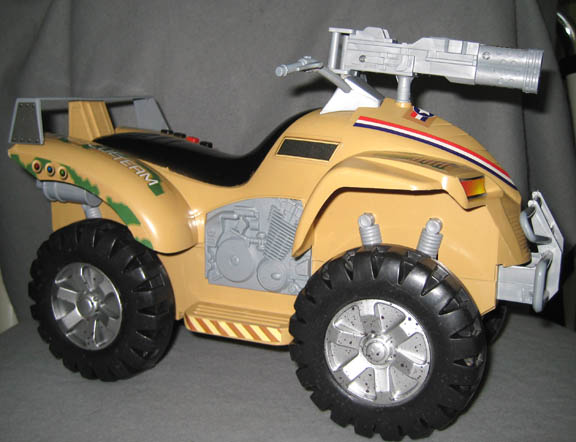
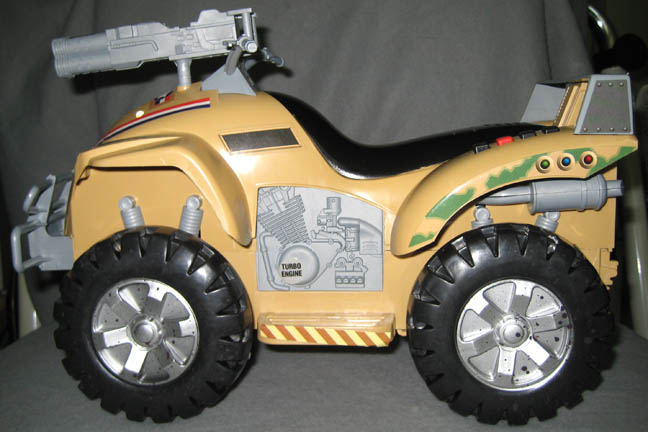
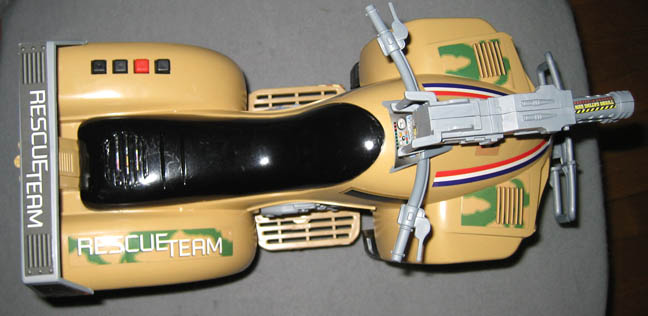
Given my general state of cynicism, I was surprised to find a shelf full of 1/6th scale action figures with accompanying vehicles. The line was called Rescue Team, and while they won't cause anyone from Hasbro or Mattel to lose any sleep, they were still pretty serviceable toys. Each action figure was driving either an ATV or a chunky military-type vehicle complete with rocket launchers. The military styling didn't interest me that much, but I thought they could easily be modified to look like excellent vehicles for Captain Action. Still, I wasn't too keen on spending the $20 price on the box for a low-end toy I only want to experiment on. Then I noticed a tag taped to the shelf:

"All toys in this aisle 75% off!"

Of course! The after-Christmas markdowns! For five bucks each, the vehicles were looking more appealing. I still hesitated, however. For one thing, I had come on foot, and lugging one of those huge boxes home would've been a chore. Also, my house was already cluttered with lots of toys. I shouldn't add to the pile. Sullenly, I left the toy aisle, picked up my prescription, and wandered home.

During the walk back, I kept thinking about how I could repaint the body "Captain Action Blue" and jazz it up with my custom-made stickers and leftover bits and pieces from model kits. I was getting that sensation I call "toy lust," something I thought I had lost when I reached puberty and found another kind of lust. So lost was I in my reverie, I had strayed from my usual route home and had to take a lengthy detour to right myself. This gave me time to rationalize. "I can drive back to the store in my car and buy one of those vehicles," I thought. "And besides, I already sold a bunch of collectibles on eBay, so I've made plenty of room for one more new toy!" By the time I reached my front door, I had made up my mind.

After I drove back to the store, I grabbed one of the boxes from the back of the shelf without looking at which vehicle I had laid my hands on. It wasn't until I got home that I realized I had bought the ATV. Although the other vehicle had those cool rocket launchers, I thought the ATV was more suited to Captain Action and probably easier to customize. I think it was the best choice.


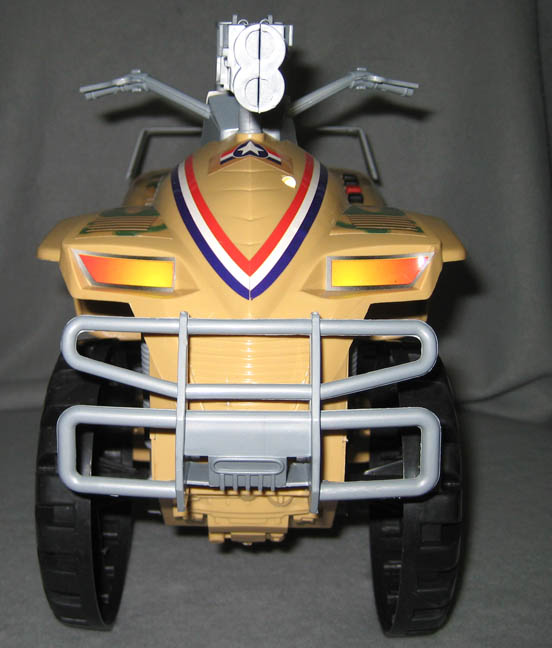
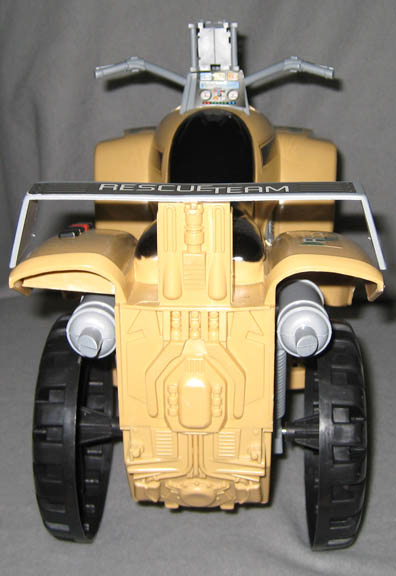
So now I'm embarking on a new project. Here are some shots of what it looked like in its original form. Stay tuned to see its transformation into the new Captain Action ATV!


Monday, January 07, 2008

L'IL SOLDIER JOE

Before I was in grade school, my mom and I spent a lot of time together during the day. With my father at work and my brother in school, she had to take me with her wherever she went, whether it was running errands, going shopping, or visiting with family and friends. One of my favorite day trips was visiting with my mom’s sister, whom we called Aunt Kay. In those days, my aunt and Uncle Al and cousins Albert and Amy lived in a row home in a residential neighborhood on the northern edge of Baltimore City. Although their house was slightly smaller than our own, they had a coveted “end-of-group” home, meaning that their house was on the end of the four or five houses that were connected together, giving them a much larger yard wrapping around three sides of the house. This afforded us kids a great, open area in which to play.

My cousin Albert was four years older than I, so he was usually at school unless it was summer time. My cousin Amy was three years younger than I, so we usually played together, although that was somewhat limited since she was a girl and barely able to walk or talk. This left me on my own most of the time, so I would bring my toys along to play boy stuff on my own, but I always coveted Albert’s toys. He had several of the old Aurora model kits, assembled and painted by him. Something I was not yet dexterous enough to do. My brother had models too, but his were almost exclusively cars, which didn’t interest me as much. Those Aurora dioramas, especially the horror characters, really fascinated me.

During the summer, my brother Craig would join us on these visits. Since he and Albert were closer in age, they would play together while I obligingly played with Amy, coloring in coloring books or playing with her toddler toys. There was only so much of this I could take, however, and one day, I finally worked up the nerve to ask Albert permission to play with his models. To my surprise, he said yes. I was so thrilled, although looking back, I’m not sure exactly what I did with polystyrene dioramas of Frankenstein and Dracula. All I can remember was that I loved playing with those things and looked forward to going to their house.

Of course, as with all good things, something has to happen to screw it up. While I was always pretty careful with toys and delicate things like models, I guess I got carried away one day and broke Albert’s Phantom of the Opera model. It was a complete accident, and I was truly sorry since I probably loved that model even more that he did. Nevertheless, his trust in me was broken. I tried one more time to get permission to play with his models, but he was adamant that I couldn’t touch his stuff anymore. I understood, but it made going to my aunt’s house a lot less interesting.

One afternoon when we were visiting, I guess Amy was taking a nap or something, because I followed my mom and aunt into the basement. My aunt was complaining about all the stuff that was accumulating down there. I was shocked when she matter-of-factly announced that my uncle had years of Playboy back-issues piled up, and even pointed them out to us. I guess she didn’t realize that I was old enough to know that Playboy was one of those “dirty magazines.” I was startled, but it made my Uncle Al seem a little cooler in my eyes.

While my aunt talked about other grown-up stuff, I zeroed in on the leftover toys piled around. Not particularly a toy, but one item that always fascinated me was a papier maché volcano stacked up in a corner. Meticulously detailed, I couldn’t figure out why on earth someone would have a scale model volcano in their basement. I never asked. My guess, in hindsight, was that it was probably an old science project of my uncle’s and it was so nice, he couldn’t bear to part with it.

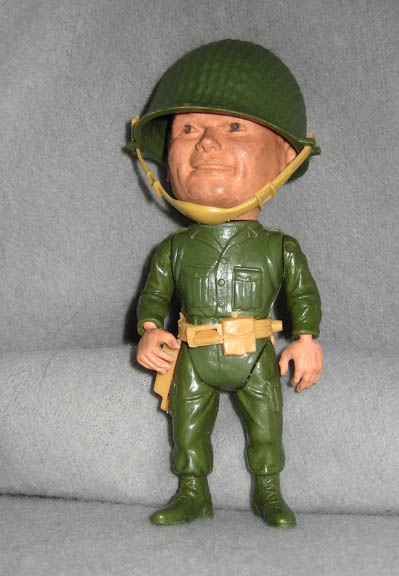
Another item that elicited far greater excitement was this curious little action figure. He was about five inches tall, and at least two inches of that was taken up by his head. A giant, blocky sort of head far out of proportion with his dainty body. He was molded out of solid plastic, and dressed like an Army soldier. He even wore a combat helmet and had tiny belts and weapons attached to him, molded out of tan vinyl. He reminded me of the old Stony Smith action figures, but seen through the reflection of a funhouse mirror.

I experienced that unique childhood thrill I can only describe as toy lust. Your pulse pounds, your heart races, your breathing becomes irregular, and your stomach flutters. That immediate, chemical rush anyone under the age of 11 experiences at the sight of a new toy that is exquisite and irresistible. I had to possess this odd little soldier man. Showing a sense of boldness I ordinarily did not possess, I asked my Aunt Kay if I could have the diminutive soldier.

“We’ll have to ask Albert, but I think it’ll be all right,” Aunt Kay told me.

I wasn’t as sure as she was. Albert never forgave me for the Phantom of the Opera incident. A sacred trust had been betrayed. I didn’t have much of a chance. We went outside where Albert was torturing my brother in some form or fashion. My cousin had a way of irritating my brother all day long until they would usually end up at each other’s throats. If I saw Albert and my brother fighting, I knew it was about time for us to go home. Anyway, Albert and Craig were engaged in some sort of argument when my aunt interrupted to ask about the soldier figure. Completely distracted, Albert shrugged it off with a, “Yeah, sure.” I was stunned and elated! Triumph was mine.

As soon as we got home, I showed the action figure off to all my friends. Just like me, they had never seen one like it before. I played with him for all of maybe…oh, a week or so, before the magic wore off. Thing was, he was too small and oddly shaped to be compatible with our other G.I. Joes and Marx action figures. He was a one-off novelty, destined for limited playability. Perhaps that’s why Albert parted with him so easily.


Decades later, I learned that the little fella’ was made by Remco in the mid-60s and was call L’il Soldier Joe. He was part of their line of “Big Head” dolls, which included versions of The Beatles and The Munsters. There was also a L’il Cowboy Pete, who had the same head as L’il Soldier Joe but had a cowboy body and appropriate acce
ssories. I also discovered on eBay that L’il Joe once came with an “Ack-Ack Jeep set.” I told my wife the story of L’il Joe and, being the wonderful spouse that she is, got me several L’il Joes for Christmas. Only one is totally healthy, while the others have sustained various injuries from past battles untold. I intend on rehabilitating these guys. It’s the least I can do for abandoning him so quickly when I was a callow lad.

Thursday, January 03, 2008

ANOTHER YEAR

Well, another holiday season has come and gone, and we’re now in 2008! When I was a kid, I would’ve expected everyone in 2008 to be riding around in jet cars and watching television on their phones (okay, I guess some of it came true). As I get older, I realize how quickly time passes and how things don’t change quite as rapidly as I expected them to when I was younger. In that respect, I’ve come to realize how inaccurate science fiction can be when predicting our future. Just before Christmas, I went to see “Blade Runner – The Final Cut” at our local historic, single-screen theatre. I hadn’t seen the movie since it was in theatres 25 years ago and while I still love the flick, I was struck with how off their vision of the future was, now that we are much closer to the movie’s setting of 2019. People zoom around in hover cars, but they still rely on pay phones rather than having mobile ones. Police carry laser weapons, but people also smoke cigarettes all over the place. Certain changes just can’t be foreseen.

I’m not really sure where I’m going with this except to say that, the older I get, the more I think change is not only inevitable, it’s also capricious. We face so many changes that we never wanted, and we lament the disappearance of things we never wanted to see go away (like historic, single-screen theatres). Some new things do actually grow out of necessity and are welcome (I love the Internet and my iPod), but others happen out of neglect or indifference (I hate George W. Bush and Al-Qaeda). New stuff just keeps happening, while we get up every morning and brush our teeth and eat our breakfasts and carry on with the routines of the day. Life barely moves when you look at it on a day-to-day basis, but when you look back at the trail of time, my how everything has changed!

So now we embark on another year that will fly by too quickly, be filled with all kinds of highs and lows and problems and triumphs, and end with Christmas presents and champagne bottles popping, and we start all over again. All the while, we hope no one gets too ill or dies or has a natural disaster befall them. The goal is to get through the months as best you can and eke out a bit of happiness along the way. Ultimately, I think most of us just want to get through life relatively happy and healthy, and help our families to stay the same way. Meanwhile, we make efforts to provide for the greater good, the creation of a better society, but our arms are frequently too short and our vision too limited. Still, we do try.

So while we roll head long through another year, I’ll continue to babble on about the past – the good, the bad, and the ugly. I’ll show you my new action figure acquisitions and creations, and I’ll probably make up some more photo-plays with my menagerie of vinyl people. I hope you’ll keep visiting, and I hope you check out the other blogs and Web sites listed to the left. Have a great year!